Author Archives: Alison German

Posthumous First Class Honours Degree Awarded to High Flying Veterinary Nursing Student

As Edinburgh Napier University and The College of Animal Welfare prepare to honour their latest veterinary nursing graduates today (Thursday 29 June 2017), our thoughts turn to the friends and family of Meghan Ambrozevich-Blair, a high flying student who was tragically killed on the A1 near Dunbar last December as she drove to work the day after her final examination.

The loss of Meghan devastated classmates and staff; 26 year old Meghan was described by teaching staff as, not only a bright and popular student, but an inspirational role model for all veterinary nurses and was on track to be one of the most outstanding students in the history of the programme.

Edinburgh Centre Manager at The College of Animal Welfare, Karen Hibell, who taught Meghan said “Meghan was a unique individual whose compassion and empathy truly touched those that she came into contact with. It was a privilege to have known and taught Meghan; she will be deeply missed, but never forgotten for what she had already achieved in her too short a time with us.”

In 2015, Megan was part of a team of eight student veterinary nurses and four academic staff who visited Kerala (India) to help educate and develop awareness of animal welfare and veterinary nursing. The ‘Send a VN to India’ project allowed Meghan and her classmates to share their knowledge and skills with staff in veterinary clinics across Kerala; showing how simple changes, such as human contact, environmental enrichment, and effective nursing techniques can make a huge difference to the lives of animals in their care.

Meghan will, not only, be awarded a posthumous First Class Honours Degree during the Edinburgh Napier University Graduation Ceremony, but also Registered Veterinary Nurse status by the Royal College of Veterinary Surgeons; an accolade that all student veterinary nurses aspire to.

Dr. David Smith, Life Sciences Programme Leader, said: “The slogan Meghan provided for the School of Applied Sciences pop up banner – ‘Edinburgh Napier gives you the opportunity to become the best veterinary nurse you can be’ – sums her up well. She was always on the front row, eager and willing to go. Above all, Meghan was compassionate; both to animals and humans and will be sadly missed by the staff of Edinburgh Napier University and The College of Animal Welfare.”

Meghan and classmates during their visit to Kerala, India

Meghan and classmates during their visit to Kerala, India

Photo of an English landscape

Turn your Love of the Great Outdoors into a Career!

City & Guilds Level 2 Diploma in Countryside and Environment

If you love being outdoors, are interested in the environment around you and are fascinated by wildlife and different habitats, why not learn more? Who knows, it may even be the start of a whole new career!

The City & Guilds Level 2 Diploma in Countryside and Environment is a one year, online distance learning programme that covers the principles behind environmental management and conservation, looking at:

  • Countryside access and recreation
  • Ecological surveys
  • Conservation and improvement of British habitats
  • Urban habitat ecology
  • Environmental and land-based business
  • Work-related experience in the land-based industries

Online learning allows you to study in your own time, from the comfort of your own home, alongside any existing commitments and, what’s more, you can start at any time!

Alongside the qualification you will undertake practical experience in a relevant placement – this can either be through employment or volunteering (for a minimum of 3 hours per week). This practical work experience will allow you to put your learning into practice; an effective combination that will leave you with both solid practical skills and knowledge.

Monthly payment options allow you to spread the cost of study into manageable payments of just £84 per month (plus City & Guilds registration and certificate fees). What’s not to love!

Find out more and apply online

“I really enjoyed the course and found it well structured, planned out and easy to follow. The tutors were very helpful and explained anything I didn’t understand, working with me to achieve my goals. I found the course to have a good balance of theory and practical elements and the online learning easy to navigate and work with; I particularly liked the practical work, especially learning formal surveying.I now plan to use my qualification to gain employment in the industry and progress to the next level of study – if you are looking to start a career in countryside management I would very much recommend this course.”
Dom Kiddell, City & Guilds Level 2 Diploma in Countryside and Environment.

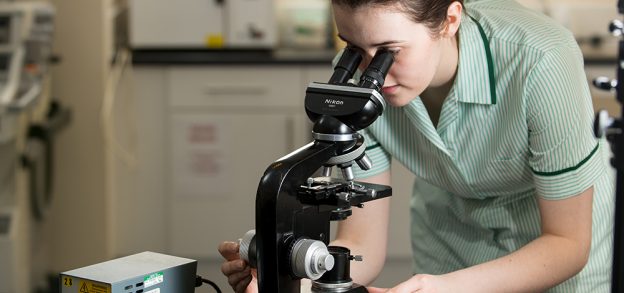
Student veterinary nurse looking through a microscope

Looking to brush up on your laboratory techniques?

We are delighted to be working with IDEXX Laboratories to deliver two CPD courses at our Edinburgh centre on the 2 and 3 August 2017.

These practical courses will look at the preparation of samples, identification of parasites and blood cells, faecal flotation techniques, worm egg counts, PCV, recognition of urine sediment, crystals and cells and much more; and from a variety of species – from dogs and cats to reptiles and livestock!

Book a place online.

Unhappy girl looking troubled

May E&D Competition Winners Announced

Congratulations to Laura Kemp and Claire Edgington for being joint winners of our May Equality and Diversity competition in recognition of Mental Health Awareness Week. During May, the College invited students and staff to submit a piece of work to help raise awareness of mental health. The winning entries consisted of a thought provoking poem by Laura and a powerful account of post-natal depression from Claire.

The winning entries are:

Personal account of post-natal depression
Read one mother’s experience of post-natal depression.

Poem
Perfection Dejection

Finding it hard to strive for that level of perfection?
Don’t let it get you down, it’s an unnecessary obsession
You need to learn to be happy with your own reflection
No need to worry so much about making a good impression

Don’t base your ideals on other people’s social media feed
Ignore those weighing scales, who cares what they say?
Facebook, Instagram, it’s a filtered snapshot, take heed
Size doesn’t matter, have that treat – enjoy your frappe!

Jealous of your friend’s home and wish you could be as neat?
You don’t know what goes on behind each closed door
There’s better things to do than eat, sleep, clean, repeat!
Upon closer inspection, perfection isn’t everything and more.

The grass isn’t always greener, other people don’t always have it better
Enjoy the moment, relish what you have now, don’t feel blue.
Of course there’s nothing wrong with being a go-getter
Just remember, keep things in perspective and make time for you

If you, or someone you know has been affected by a mental health problem, you can find sources of information on the Mental Health Awareness Week website.

Karen Hibell

CAW Edinburgh Centre Manager Nominated for National Award

Karen HibellCongratulations to Karen Hibell, Edinburgh Centre Manager at The College of Animal Welfare, for being nominated in the CQ Veterinary Nursing Educator Awards 2017; awards that recognise individuals who make a significant contribution to the education and training of veterinary nurses.

All the nominations are currently being reviewed and the winner will be announced shortly; with the presentation of the award being made at Central Hall, Westminster, London on 10 June 2017.

Congratulations Karen and good luck!

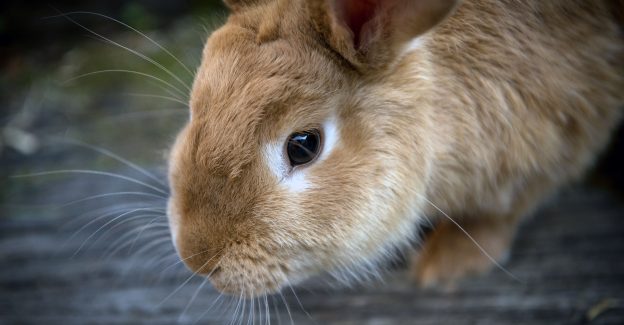
Brown rabbit on a piece of wood

Be the rabbit nurse you’ve always wanted to be!

Join rabbit enthusiast, Claire Speight RVN C&G Cert VNES, on Friday 30 June at Leeds and find out how you can best care for rabbits in the veterinary practice environment, as well as providing clear accurate information to owners to enhance the welfare of rabbits.

Claire holds the City & Guilds Veterinary Nursing of Exotic Species certificate, works in a practice with a high rabbit caseload, and is a regular contributor to veterinary journals as well as being the editor of Rabbiting On; the Rabbit Welfare Association’s magazine.

Providing Gold Standard Rabbit Client Care (9am-12pm) will look at how we can provide information to owners that really makes a difference to their rabbits; whether that be via rabbit clinics, information evenings or just one-to-one advice.

Make Yourself the Rabbit Nurse You Want To Be (1-4pm) will look at how we can ensure that rabbits receive the nursing care that best suits their special requirements; exploring diseases, looking at an overview of their bodily systems and discovering clinical techniques such as IV catheter placement, blood sampling and assisted feeding.

What’s more – book on both courses and you will get a free lunch!

Book a place online today!

English Springer Spaniel on the beach

New Official DNA Testing Scheme for English Springer Spaniels – AMS

The Kennel Club has approved a new official DNA testing scheme for Acral Mutilation Syndrome (AMS) in English Springer Spaniels; the fifth most popular breed of dog in the UK.

Caroline Kisko, Kennel Club Secretary, said: “The Kennel Club is constantly reviewing DNA testing schemes in conjunction with breed clubs to ensure that breeders are able to continue breeding healthy dogs. This new DNA test for the breed will help breeders make informed decisions when it comes to breeding, enable potential puppy buyers to be aware of issues which could affect their chosen breed, and ultimately protect and maintain the health of English Springers.”

More information about the test, can be obtained directly from Antagene. The results of the test can only be recorded upon owner submission to The Kennel Club. Test results will then be added to the dog’s registration details and will appear on any new registration certificate issued for the dog and on the registration certificates of any future progeny of the dog, and also on the Health Test Results Finder on the Kennel Club website.  Results for dogs already tested can also be recorded, but owners will need to submit copies of the DNA certificates themselves.

If the owner includes the original registration certificate for the dog (not a copy) then a new registration certificate will be issued, with the DNA result on it, free of charge.  Please send any DNA test certificates to Health & Breeder Services, The Kennel Club, Clarges Street, London, W1J 8AB or scan and email copies of the certificates to hbs@thekennelclub.org.uk.

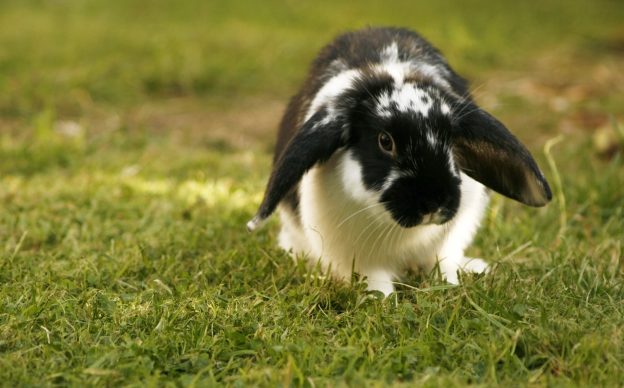
Black and White Rabbit

5 Things You Need to Know Before Getting Rabbits

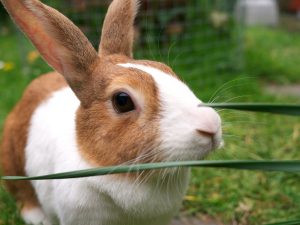
Brown and white dutch rabbit in a garden

Did you know there are estimated to be around 900,000 rabbits kept as pets in the UK?* Rabbits can make wonderful pets; they can be tamed and taught to enjoy being handled, and they are relatively undemanding in comparison to some other animals. However, they do have some complex needs and require time and commitment in order to live a happy and healthy life.

It is important never to pursue pet ownership on impulse, and to think carefully about how your new pet will fit into your life; this involves speaking to the appropriate industry experts, and educating yourself about the responsibilities behind pet ownership. If you’re serious about welcoming rabbits to the family, there are a few things you need to consider…

1. Rabbits are social animals…

You might be thinking about buying one rabbit, but it would be much better to welcome two (provided they are neutered to stop fighting and breeding). Rabbits are naturally social animals and, therefore, companionship is vital to their wellbeing. Single rabbits that are not given enough attention by their owners will soon become bored and lonely. Therefore it is important to, where possible, keep rabbits in pairs or groups.

2. Rabbits need more than just carrots…

Most of us are familiar with an image of Bugs Bunny, carrot in hand. Its true rabbits love carrots; but they require a varied, well balanced diet in order to live a happy and healthy life. Take note of the following foods…

  • Hay – Hay forms an essential part of a rabbits diet by helping to stimulate intestinal movement. Rabbit’s teeth grow continuously throughout its life; hay also helps to wear down teeth through chewing and grinding.
  • Vegetables and sweet treats – Carrots aren’t the only vegetables your rabbits will enjoy and, in fact carrots should only be fed occasionally due to their high sugar content. Other good choices include broccoli, cabbage, dandelion green and kale. You can also offer your rabbits fruit such as apple slices, pears and strawberries as a sweet treat. Be aware that treats should only be offered in moderation in order to prevent your rabbits from developing obesity or intestinal problems.
  • Water – As is the case with all animals, water is vital to rabbit health so make sure your rabbits always have access to fresh water.

It is important to make sure you introduce any dietary changes slowly, as making changes too quickly can cause potentially toxic intestinal problems in your rabbit. In addition – do not be alarmed if you find your rabbit eating stool – this is normal! Rabbits first pass soft moist stools called ‘caecotrophs’ which they then eat again to extract vital nutrients that keep your rabbit healthy.

3. Rabbits need a safe, secure and spacious living space 

Whether your rabbits will be living inside or outside, it is important to provide an environment that is safe, secure and allows plenty of breathing space. Your cage/hutch should provide an enclosed area that allows for undisturbed rest, as well as be weatherproof to protect your rabbits from extreme weather conditions. Your rabbits should also have daily access to a large exercise run (or secure garden).

Rabbits, much like humans, become easily bored if their environments do not provide both physical and mental stimulation; therefore it is also important that you provide enrichment such as tunnels and climbing platforms, twigs and places to hide. Alternatively, digging is a common pastime for both wild and domesticated rabbits; by providing an appropriate substitute, for example a sand or earth pit; you can help keep your rabbits occupied and busy without damaging your home or garden.

4. You need to watch out for signs of ill health!

As rabbits are easily stressed by routine or diet changes, sometimes even when an owner has made all the right precautions; rabbits will still become unwell. It is often difficult to determine illness in rabbits, as they often hide symptoms of pain and discomfort; however the most common tell-tale signs include lack of appetite, limping when walking, inability to sleep and heavy or fast breathing. Always contact your vet if you feel there is something wrong with your rabbit.

5. Thinking of getting a pair of rabbits? Tick these essentials off of your list!

Before you bring your rabbits home, it is essential you have the necessary supplies needed to provide a safe home. Make sure you have the following checked off as a minimum!

  • A suitable cage or hutch
  • Straw
  • A water bottle or bowl
  • A food bowl
  • Appropriate toys and chew toys
  • Grass hay
  • Fruit and Veg
  • Bedding materials
  • Grooming brushes and combs
  • Rabbit-friendly vets
  • Vaccinations

For more information and advice on keeping happy and healthy rabbits please visit the Rabbit Welfare Association.

Squares of chocolate on silver foil

Owners warned to keep their dogs away from Chocolate treats this Easter

Squares of chocolate on silver foilNew figures from a British Veterinary Association (BVA) survey show that two in three vets treated at least one case of chocolate poisoning in dogs last Easter.

The survey, which polled over 1,600 UK vets, shows a marked increase in the number of vets seeing at least one dog with chocolate poisoning compared to the same period in 2015.

Chocolate can be highly poisonous to pets as it contains theobromine, a naturally occurring chemical found in cocoa beans, which, while fine for humans, is harmful to dogs and other animals.

BVA President, Gudrun Ravetz, said: “Easter is great fun for the whole family, but unfortunately dogs like to join in too. With their keen sense of smell, they will easily win Easter egg hunts so wherever chocolate is being stored – inside or outside – make sure it is pet proof and out of reach of inquisitive noses to avoid an emergency trip to the vet. Also remind any visitors over the Easter holidays to keep their chocolate out of the dog’s reach too. Over the bank holiday weekend veterinary practice opening hours may vary, so make sure you know how to contact your local vet during Easter”

The effects of chocolate poisoning in dogs usually appear within 12 hours and can last up to three days. First signs can include excessive thirst, vomiting, diarrhoea and restlessness. These symptoms can then develop into hyperactivity, tremors, abnormal heart rate, hyperthermia and rapid breathing. In severe cases, dogs can experience fits and heartbeat irregularities and some cases can result in coma or death. If you suspect your dog has eaten chocolate, please contact your local vet immediately.

New NPL guidance documents for clinical coaches

A quick reminder to all CAW clinical coaches… please make sure you familiarise yourself with the two Nursing Progress Log (NPL) guidance documents which were uploaded to the clinical coach area of the VLE a few weeks ago.

The ‘Guide to NPL Completion’ gives guidance on completion of the revised NPL skills and also makes reference to the City & Guilds syllabus and OSCEs.

A new ‘Professional Discussion Template’ is also available for use.

Both documents can be found under the NPL Document menu.