Author Archives: Amber Tennant

British Veterinary LGBT+ Logo

Vicki Nielsen joins British Veterinary LGBT+ committee

We’re delighted to say that one of our staff members, Vicki Nielsen, has joined the British Veterinary LGBT+ committee as one of their Veterinary Nursing Representatives!

The British Veterinary LGBT+ Society is made up of people from all over the veterinary industry. The group develops LGBT+ networks, provides sources of help and support, creates resources to reinforce open and inclusive working environments, raises awareness of LGBT+ issues in the veterinary profession and spreads messages of equality and diversity.

Vicki’s role will focus on raising awareness of the organisation in the veterinary education sector. On her new role, Vicki said:

“I am working alongside Sam Morgan, who was former President of the BVNA and is one of the Directors of Abbeydale, a veterinary nursing college. Together, we want to raise awareness of BVLGBT+ among educational providers and establishments and for the group to be a resource of information, advice and guidance to all those supporting and training LGBT+ student veterinary nurses both in the workplace in training practices as well as in the educational setting.”

“I am very excited about trying to increase awareness of the group in the veterinary education sector and reaching out to our training practices that are supporting our future generation of veterinary nurses that may be struggling with their sexuality or identity and providing them with resources and information to help.”

Congratulations Vicki!

To keep up to date with the group’s latest news, events and activities, make sure you like the British Veterinary LGBT+ Facebook page.

Suitably Qualified Person (SQP) - Companion Animal Training

Prescribe yourself with some professional progression in lockdown

Working in veterinary practice during these challenging times means veterinary nurses need to be more adaptable and efficient than ever before. With this in mind, now could be the perfect time for you add another ‘string to your bow’ by studying to become a Suitably Qualified Person (SQP). 

What is an SQP and what do they do?

A SQP is an animal medicine advisor who is qualified to prescribe and/or supply certain veterinary medicines under the Veterinary Medicines Regulations.

Why gain SQP status?

Obtaining an SQP qualification will enable you to bring more to the table at your current practice, boost your credentials and help you to stand out against other candidates when applying for jobs in the future. Gaining this formally recognised qualification allows you to offer a more effective and efficient approach to medicine in these extraordinary times!

More information about the Level 4 Certificate for Suitably Qualified Persons (SQP) – Companion Animal

Completion of the VetSkill Level 4 companion animal SQP qualification at The College of Animal Welfare will allow you to join the VetSkill SQP register, qualifying you to prescribe and dispense POM-VPS and NFA-VPS medicines to companion animals.

The programme covers:

  • Legislation and Professional Requirements
  • An Introduction to Companion Animal Anatomy, Physiology and Nutrition
  • Companion Animal Health, Disease and Parasite Management
  • Prescribing and Supplying Veterinary Medicines to Owners/Keepers of Companion Animals

The course is delivered via distance learning, meaning you can start at any time and study from anywhere in the UK or overseas*

As some of us may be at home during lockdown, now could be the perfect time to take the opportunity to invest some time in developing your skill set. For more information about the course, visit our website.

*Please be aware attendance at a CAW centre will be required for the unit exams and final OSCE examination.

Veterinary Nursing September 2020 Intake

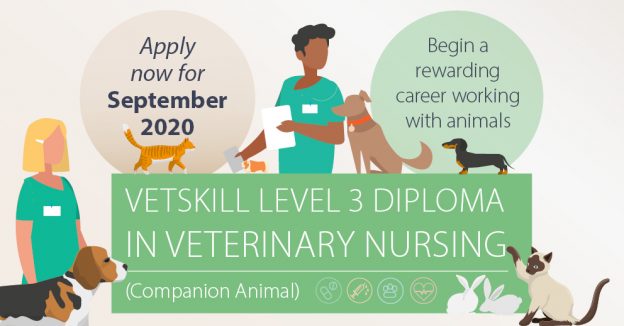
Autumn Veterinary Nursing Intake Open for Applications

Applications are open for the September intake of our Level 3 Diploma in Veterinary Nursing (Companion Animal Pathway).

With many of us staying at home or working reduced hours due to the coronavirus pandemic; if you’ve always wanted to work with animals, now could be the perfect time to review your career goals, take a leap of faith and start working towards a job you’re really passionate about.

Throughout the course you will develop the key skills and knowledge needed to thrive as a veterinary nurse, as well as gain significant industry experience in a veterinary practice. Visit our website today to apply for the September intake. If you’re wondering whether veterinary nursing is for you, read on to find out more about the role and where a VN qualification can take you on your career path…

Discover the benefits of joining the veterinary nursing profession

By training as a veterinary nurse, you’ll…

  • Gain a rewarding job where you can make a real difference to the lives of animals
  • Secure real job prospects with roles available in veterinary practice, teaching, sales and more
  • Benefit from life-long learning with advanced qualifications and opportunities to specialise

Find out more benefits of becoming a veterinary nurse

Learn what life as a veterinary nurse involves

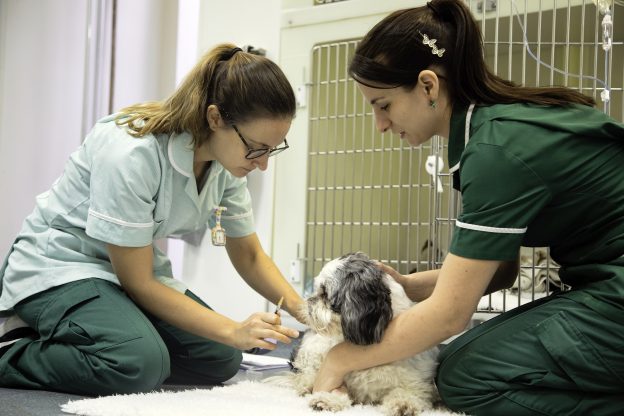
Outside of the consulting room, RVNs handle most of the care required by our pets. They provide nursing care, carry out technical work and perform a range of important diagnostic tests and medical treatments.

Discover the different types of veterinary nursing roles in practice

Read more about career progression for veterinary nurses

Veterinary nursing is a varied, rewarding career path that has a wide range of professional opportunities. After completing your formal training, you could…

  • Work in a first opinion veterinary practice, referral practice or a veterinary hospital
  • Work as a sales representative for veterinary suppliers
  • Teach future veterinary nurses in education roles
  • Lead teams as a Head Veterinary Nurse

Check out more career paths for registered veterinary nurses

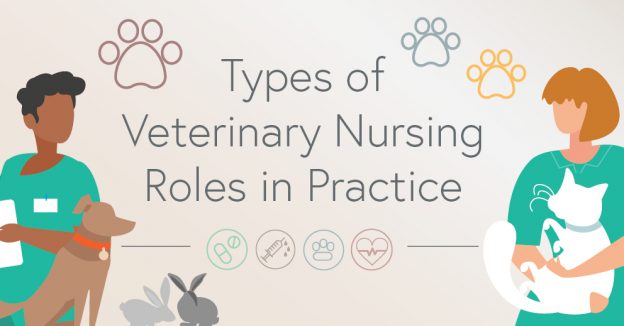
Types of Veterinary Nursing Roles in Practice

6 Types of Veterinary Nursing Roles in Practice

Have you ever wondered what life as a veterinary nurse involves?

Outside of the consulting room, RVNs handle most of the care and attention required by our pets. Their registration with the Royal College of Veterinary Surgeons (RCVS) shows that they are responsible for their professional conduct and remaining up-to-date with their professional skills and knowledge.

Veterinary Nurses carry out nursing and technical work and perform a range of important diagnostic tests, medical treatments and minor surgical procedures under veterinary surgeon direction. Beyond technical work, RVNs also educate owners on the welfare of their pets. In many practices they run their own nursing clinics.

Read on to learn about the responsibilities of a veterinary nurse and the various nursing roles you may come across in practice.

1. Nursing care

RVNs are responsible for carrying out nursing care during the course of the case. Like nurses in NHS hospitals they perform a wide range of important tasks such as medicating patients, dressing wounds and monitoring intravenous fluids. Beyond this, RVNs also handle the basic needs of the patient including exercising and feeding your pet, cleaning accommodation and providing lots of fuss and cuddles.

2. Pet owner education and nursing consultations

Veterinary nurses undertake a rigorous training programme and continue to study throughout their careers to maintain professional expertise. Many go on to develop specialisms in areas such as dentistry, feline nursing or anaesthesia. As such, many veterinary practices offer nurse-led clinics on areas including weight management, dressing changes, post-operative checks, puppy training and socialisation, microchipping and diabetic clinics.

3. Clinical Coaching

Clinical coaches are veterinary nurses tasked with supporting student veterinary nurses in practice, ensuring they are practicing safely and providing opportunities for them to complete their Nursing Progress Log (NPL) or e-portfolio to complete their veterinary nursing qualifications. Coaching is a great avenue for Continuing Professional Development (CPD) in coaching and mentoring skills, which can also pave the way to formal qualifications.

4. Diagnostic Testing and Procedures

RVNs undertake many laboratory tests in-house. They are trained to take and process x-rays as requested by the veterinary surgeon. This is often a critical step in the process of diagnosing illness or injury in your pet. 

5. Veterinary Nurse Team Management

Some veterinary nurses have team management responsibilities. Head Veterinary Nurses lead veterinary nursing and veterinary care teams in practice, in order to manage day-to-day workflow efficiently. Day-to-day, this usually covers many areas in team management, for example: recruitment, development, absence reporting and monitoring. Sometimes head veterinary nurses are also involved with managing expenditure to ensure the practice is using resources cost-effectively. The role is perfect for those looking to have a bigger influence over practice life; whether that be over developing staff, customer service or clinical practice.

6. Surgical Nursing and Anaesthesia

Veterinary nurses undertake a rigorous training programme in order to assist veterinary surgeons as part of the surgical team. They monitor the levels of patient anaesthesia throughout operations. They’re able to recognise different stages of anaesthesia and potential problems, as well as legally undertake minor surgical procedures under veterinary surgeon supervision. This could be the suturing of wounds or dental scaling and polishing following assessment and removal of any damaged teeth by the vet.

Follow us on social media for the latest advice about careers working with animals:

[ss_social_follow networks=”facebook;twitter;instagram;linkedin;pinterest”]

Togetherall Homepage ad

Gain free mental health support through Together All (formerly Big White Wall)

We’re delighted to announce all our staff and students can now access free online mental health and wellbeing support through Together All (formerly Big White Wall) This service can be used at any time of the day or night, all year round.

Whether you’re suffering from stress, problems with sleep, feeling low or unable to cope, or simply need someone to talk to, Together All can help you get support, take control and feel better. Most members report feeling better and more able to cope as a result of using the service. What’s more – nearly 90% use Together All outside of 9-5pm.

The service enables members to get things off their chest in a safe, anonymous global community. You can access a library of self-care resources. This includes clinical tests, tips and guided group courses covering a range of topics. Trained professionals are online 24/7 to keep all members safe and provide extra support. Together All can help with adopting useful coping strategies and behaviours to help improve mental health and wellbeing. On Together All, people are totally anonymous to other members, and personal information is kept secure.

The college will not be informed of those who are signed up to Together All or activity on the service unless they are seriously concerned about safety whilst on campus. To join, go to the Together All website and sign up under ‘I’m from a university or college’ using a staff or student e-mail address.

Accessing Together All – Students

  1. Visit https://togetherall.com/en-gb/
  2. Click ‘Register’
  3. Select “I’m from a university or college”
  4. Enter your college email address (surname in lowercase + your six-digit VLE number + “@caw.ac.uk”). Example: surname123456@caw.ac.uk If you don’t already have access to this email account, follow next set of instructions (below).
  5. Log into your email to confirm your registration.
  6. 6. The Big White Wall website will then walk you through all of its’ features

Log into your Student email and Microsoft Office 365

Microsoft Office 365 is a free service provided by CAW for its’ students. It gives you all the software required for your studies (Word, PowerPoint, etc). It is available as a download or you can work on documents online through any of your devices as well as dedicated apps. Registration is easy, so what are you waiting for?

  1. Visit https://www.office.com/login/
  2. Enter your student email address (surname in lowercase + your six-digit VLE number + “@caw.ac.uk”):
  3. surname123456@caw.ac.uk
  4. Click ‘Next’
  5. Then select “Forgotten my password”

This will send an email to your personal email address that you typically use with CAW.

Follow the link contained within this email and set your new password Access your student email by visiting https://www.outlook.com and signing in with your student email.

We hope this provides a valuable service to both our students and our staff. Together All will compliment our College counselling service, who continue to be available via phone, email or video call.

How to Show You're Ready for Promotion in Veterinary Practice

10 Ways to Show You’re Ready for a Management Position in Veterinary Practice

If you’re working in veterinary practice and feel you’re doing a great job in your current position, it’s only natural to want to develop and grow. Perhaps you’ve been working as a veterinary nurse for some time and chasing that elusive promotion to Head Veterinary Nurse? Or maybe you’ve always wanted to be a Practice Manager?

Not matter your reasons, if you know you’re ready to take on more responsibility and want to show your organisation you have the skills to do so, here are a few ideas for what you can do to show you’re the right fit for a management position in your veterinary practice:

1. Step up for bigger projects and come up with new ideas

Opportunities to impress or take on more responsibility don’t always arise naturally. Sometimes you need to create these chances for yourself. This means jumping at the opportunity to take on more responsibility, stepping up for jobs others may not want to do, or coming up with new ideas to implement to make the practice better. For example, if you’re a veterinary nurse this could be offering new nursing clinics or coming up with new ways to promote the practice in the local community. This shows you care about your organisation and you’re a team player who is willing to put themselves forward for the greater good of the veterinary practice.

2. Let your aspirations be known 

Key decision makers may not always think to consider you for managerial positions if they don’t know you’re keen to develop, or if they don’t even know you – so put yourself out there and start making connections. Letting your aspirations be known means you can ask for advice and feedback about how to put yourself in a better position. Your boss may be able to help you by allocating you a mentor in practice, or arranging more opportunities for you to job shadow managers or lead on projects of your own, to help you build the relevant skills and knowledge needed to become an effective manager in the future.

3. Strengthen your clinical and management skills and knowledge

It’s important to acknowledge that nobody stops learning and that you should never pass up the opportunity to learn something new. As a leader in a veterinary setting, you will need to be committed to keeping your clinical skills up-to-date and open to ongoing education, so that you can support and develop more junior members of the team.

Not only this, supporting teams requires excellent leadership and management skills. Whether you have management experience or not, undertaking a leadership and management qualification could help you develop your leadership capabilities and confidence to deal with a range of management challenges by undertaking a leadership and management qualification. Formal study could also pave the way to a promotion or further on-the-job training working towards a leadership role.

Head Nurse Congress

Head Nurse Congress

If you’re aiming for a Head Veterinary Nurse position in particular, have you considered coming along to our annual Head Nurse Congress? Head Nurse Congress is an event solely focused on the role of the head veterinary nurse and practice manager – exploring the many different responsibilities, to the challenges that are faced on a daily basis.

During the congress you will be able to listen to a jam packed timetable of relevant talks, as well as gain lots of best practice information and tips on leadership/management to help lay the foundation for a promotion in the future. Not only this, you will gain valuable CPD hours! 

No matter how you choose to do so, it’s important to ensure that you keep up –to-date with industry trends and news, and undertake regular continuing professional development (CPD) to provide valuable inside knowledge to your colleagues.  

4. Be aware of what is going on around you in the wider organisational picture

As a leader in a veterinary setting, you need to have the respect and ear of all the stakeholders: the veterinary nurses, the vets, partners, receptionists – and so on. By watching and learning you can discover a wealth of useful information to assist you in building better relationships with all stakeholders and identifying opportunities for progression in the practice.

Identify other leaders around you, such as those in other departments, or your own boss, and establish what it is that makes them stand out as being deserving of the title ‘leader’. This way, you can better understand what wider business goals for the practice are, enabling you to generate ideas that will garner attention and contribute towards wider strategic objectives – which won’t be forgotten when internal opportunities for promotion come around.

5. Take opportunities to teach and help other team members

Veterinary team leaders such as Head Veterinary Nurses and Practice Managers spend a lot of time developing their staff members; whether this be by providing feedback on work, teaching them new skills, undertaking probation reviews or providing opportunities for development in areas they would like to improve in.

In this sense, it’s important that you have the ability to work with other people and they feel comfortable coming to you for help and guidance. Don’t be afraid to share your knowledge and skills with others, as this will mean that other people can grow and you’re building trust and rapport with your team members.

More than this, you could develop your teaching skills by volunteering for roles such as clinical coaching or undertaking a relevant qualification, such as in coaching and mentoring or leadership and management.

6. Get to know your co-workers

As a leader, delegation and monitoring can help you juggle intense workloads. You’ll be able to do this much better if you understand what your co-workers strengths are, what they enjoy doing and what they are good at. More than this – you work with your co-workers every single day,

7. Be professional and lead by example

It’s important to lead by example and follow your practice’s protocols and policies. Good leaders cannot enforce lateness if they are always late, or keep a strict dress code if they continuously break it, for example. Rules are there for a reason and it is often a manager’s responsibility to ensure others abide by them. Show your boss and senior management that you’re willing to be a good example for other team members, and you’re sure to be considered for future managerial opportunities.

8. Have confidence in your skills and abilities

Being responsible for teams is no easy task and is no role to sign up for lightly. You’re not always going to have all the answers or know exactly what to do; and you don’t need to pretend that you. What you do need to do, is believe in what you are doing and take responsibility for your actions. This confidence also needs to be instilled in those around you. Speak with confidence and have faith in your own ability. This will be noticed by those around you – including the key decision makers.

9. Motivate others and become the ‘go-to person’ in veterinary practice

A big part of leadership is inspiring those around you to be the best that they can be and go the extra mile for the veterinary practice. You want to be the person who encourages those around you to be motivated and contribute to practice objectives, as well as pursue their own professional goals. This doesn’t mean you need to give a pep talk at every turn – leading by good example is far more powerful than any ‘motivational speech’ you could give. 

More than this, leaders aren’t necessarily the individuals who are ‘the boss’ or have ‘manager’ in their job title. It’s possible to lead from anywhere in an organisation, and a true leader is one that is followed without force. This is demonstrated when you become the person that your team always look to for support or to bounce ideas off. Make yourself this person by always giving input when asked, and offering constructive advice.

10. …lastly, don’t give up on your goals

Sometimes, you could take all of these steps and still have trouble finding opportunities. It may be that your veterinary practice simply doesn’t have the capacity or room for progression at the moment – but that may not be the case forever. If it’s something you really want, you always have the option to look for veterinary management roles elsewhere. You never know what opportunities are around the corner.

Being a leader is not about having control of other people. It is about being proactive, asking questions (and listening to the answer), demonstrating a good example and stepping up when something needs to be done. Ensure you remain in tune with what is going on around you and develop your management skills, and you will soon be on the way to landing that elusive managerial role and becoming an inspiring leader.

An ILM leadership and management qualification can help you gain the skills needed to become a manager or leader in your practice

If you’re an aspiring head veterinary nurse or practice manager, our ILM accredited leadership and management courses can help you nurture the skills needed to motivate your co-workers, manage stress levels in your team and deal with difficult situations, all whilst boosting your career and salary prospects. You’ll also look at:

  • Manage team dynamics and deal with conflict
  • Utilise individual strengths and motivate teams
  • Delegate workloads and set objectives
  • Give direction and guidance 
  • Contribute to planning, problem solving and decision making
  • Apply discipline in the workplace

Starting in June, the courses offer a combination of online learning and study days, allowing you to fit your studies around your day-to-day commitments. What’s more – if you’re employed in a veterinary practice, you can save over £500 on course fees this Summer, and get a year’s free membership to the Veterinary Management Group.

Apply for a leadership and management qualification today

Clinical Coach and SVN

5 Tips for Effective Clinical Coaching

If you’re a clinical coach or mentor in your veterinary practice, you’ll know the responsibility for supporting junior team members goes way beyond helping them learn the technical knowledge needed to do their job, or achieve a qualification. It’s also about creating well-rounded, dedicated staff who understand the unwritten rules and responsibilities of the profession.

To this end, we’ve put together some tips for more effective clinical coaching…

1. Master the art of “active listening”

Active listening skills are critical to being a good clinical coach, because the success of coaching is built upon how well you communicate with each other. Coaches who know how to listen actively will not simply sit back and listen to what someone has to say. Instead, they will go the extra mile to make sure they’re being heard. Active listeners will sit up straight, take notes, ask open questions that push discussion, repeat what they’ve heard to clarify their understanding, and provide verbal gestures to show they’re following what you’re saying.

2. Invest in your team’s success 

People who are not just in it for themselves and genuinely care about the success of a business make the best clinical coaches, because they’re not greedy or coy with the skills and experience they have to offer. Instead, they’re actively invested in the success of others in the organisation, want to see people do well and are willing to teach others what they know in order to help them.

3. Act as a positive role model

More than anything else, good coaches should be good role models to the people they’re developing. The best coaches are people who take pride in what they do, want to grow and truly care about their own careers. This is because they are more likely to want to make the most out of their coaching programme. What’s more – because they carry high expectations for themselves, they will bring high standards into the relationship and push for ambitious goals in their mentees too.

4. Focus on helping others to “problem solve”

Good coaches understand the value of practical guidance and feedback in helping someone to solve problems constructively. This is what coaching and mentoring is all about. What’s more – they can ask the right questions and prompts that allow others to understand their strengths and weakness and set appropriate career goals for themselves.

5. Value ongoing learning and growth

Good coaches don’t just believe they can learn something from anyone and anything, they know they can and therefore actively look out for opportunities to learn something new. They understand that they have just as much to gain from mentoring as their mentee, and that the relationship can expose them to new ideas and ways of thinking that will aid their personal and professional growth.

If you’re interested in developing your coaching and mentoring skills, our Coaching and Mentoring qualifications, accredited by the Institute of Leadership and Management (ILM), can help you support development within the workplace, as well as gain confidence in influencing, guiding and supporting those around you. For further information on our courses, or details about how to apply, visit the CAW Business School website. 

Environmental sustainability in Veterinary Practice

20+ Ideas to Boost Environmental Sustainability in Your Veterinary Practice

As veterinary professionals, we have a natural compassion for living creatures and the natural world.

From LED light bulbs to recyclable paper, every veterinary practice has scope to reduce its environmental impact, whatever the size or budget. We want to share some simple ideas for eco-friendly ventures you could implement in your veterinary practice.

Read on to discover some simple ways you could make your veterinary practice more environmentally friendly:

Saving energy

  • When it’s time to replace light bulbs, consider more efficient bulbs that use less energy to emit comparable lighting. 
  • Keep infrequently used electrical devices unplugged until needed
  • Turn lights, computers and monitors off overnight or when not in use
  • Only use washing machines and dish washers when you have full loads and dry using airers/drainers where possible

Recycling and reducing waste

  • Communicate with clients digitally where possible (for example, text or phone call appointment reminders and e-newsletters for key practice updates)
  • Consider electronic monitoring and scanning software to track patient visits, payments and medical records
  • Encourage staff to bring in reusable mugs, glasses and utensils instead of using paper or single-use plastic cups. In the waiting room, select biodegradable or recycled paper cups for drinking waste
  • Install waste stations that include separate compartments for trash and recyclables and ensure your staff know the appropriate disposal methods for all waste products
  • Only use recycled and recyclable paper products, and reuse and recycle paper where possible
  • Reduce packaging as much as possible, for example by asking your suppliers to minimise packaging materials
  • Ask your staff to print only when necessary and print double sided to save paper
  • Use the internet and social media channels such as Facebook and Instagram for marketing your clinic and advertising any offers, instead of printing flyers and brochures

Think Green Products

  • Think about what commercial products your practice offers. Are you stocking green pet products? Leads, collars, toys, and bowls can all be made from recycled and eco-friendly materials
  • Use eco-friendly cleaning chemicals for surfaces, windows, floors, and laundry where possible
  • Use local labour, suppliers and materials where available to reduce CO2 and help the local community
  • Keep up to date with eco-friendly products and services that could benefit your practice whilst protecting the environment

Promote Eco-friendly Travel and Green Living Outside of Work

Make Your Grounds Wildlife Friendly

If your practice has gardens or outdoor spaces, think about how you can create a safe space for wildlife and provide cover, plants and water for all types of small animals, insects and birds:

  • Install birdhouses or feeders
  • Let the grass grow so plant and insect species can thrive
  • Create a space for insects
  • Make and use your own compost in your outdoors spaces to naturally enrich your soil and provide a habitat for worms and woodlice
  • Leave piles of rocks or twigs in an area of your outdoors spaces to create shelter for insects such as beetles and spiders
  • Use gapped fencing if possible to encourage and create easy access for hedgehogs
  • Relax about weeds where appropriate as plants such as nettles and daisies are an important source of food for many insects
  • Grow flowers to bring colour to your outdoor spaces, help bees and provide food for insects (choose drought resistant, non-toxic plants)
  • Use a buried bucker or trough to create a small pond for wildlife

Get All Staff Involved

“Going Green” does not have to be a one-person job; it should be a team effort! Get staff involved to encourage excitement about sustainability and help to make ideas a reality:

  • You could conduct an interactive session at your clinic to brainstorm with other members of the team about sustainability practices you can adopt
  • Appoint one of your staff members as a “green representative” to oversee your efforts and encourage others to use greener practices
  • Use staff emails to signpost to relevant policies and procedures at the practice and encourage participation/engagement

Have a Green Plan and Strategy in Place

Every veterinary practice has scope to reduce its environmental impact, whatever the size or budget. The best way to maintain an eco-friendly business ethos and become a cheerleader for sustainability is to create something to keep you accountable. Sit down with your team and come up with a set of green objectives, policies and responsibilities to help shape your activities. By working together, we can all live a little greener!

10 Ways to Become a Better Head Veterinary Nurse

10 Ways to Become a Better Head Veterinary Nurse

It’s a difficult balance to be a head nurse: you need to be caring, motivating and approachable to your staff, but you also need to be firm and authoritative when needed.

The role requires good management and leadership skills. The job also involves a lot of physical work and dealing with individual personalities can sometimes be challenging, therefore you must have excellent interpersonal skills and be able to support your team with patience, confidence and care.

Take a look at our tips for becoming a more effective leader and improving your skills and abilities as a Head Veterinary Nurse…

1. Take Opportunities to Boost Industry Knowledge and Technical Skills

Professionally, to be a good Head Nurse you will need to possess good theoretical knowledge and excellent clinical skills, which can be used to support and develop more junior members of the team.

What’s more – you will need to be committed to keeping your skills up-to-date and open to ongoing education. It’s important to acknowledge that nobody stops learning and that you should never pass up the opportunity to learn something new. For example, you could develop your leadership capabilities and confidence to deal with a range of management challenges by undertaking a leadership and management qualification, or by attending our Head Nurse Congress (more information below).

Head Nurse Congress

Head Nurse Congress

Head Nurse Congress is an event solely focused on the role of the head veterinary nurse and practice manager – exploring the many different responsibilities, to the challenges that are faced on a daily basis.

During the congress you will be able to listen to a jam packed timetable of relevant talks, as well as gain lots of best practice information and tips on leadership/management to help lay the foundation for a promotion in the future. Not only this, you will gain valuable CPD hours! 

Find out more about Head Nurse Congress

2. Be Approachable, Respectful and Friendly

Showing respect and understanding for colleagues and their concerns is essential to building trust, which will ensure that your team feel able to come to you to discuss problems. Make it clear that you’re there for your team and that you will do your best for them so long as they do their best for you.

Regularly check in on your team on a one-to-one basis to make sure they’re happy with their role and address any concerns they may have about their work. And, of course; a little ‘please’ and ‘thank you’ always goes a long way in the world of work!

3. Put Compassion, Empathy and Humility First

Sometimes your team members will experience troubles in their personal lives which will show in their performance, and you must be supportive in your response to this.

You should always approach uncomfortable situations with kindness. No one really knows what’s going on in other people’s lives. It’s not your job to fix your nurses’ problems, but it is your job to be a sympathetic ear and push them in the direction of professional help if needed.

If a nurse is having a hard time, ask them what they need to do in order to feel better. This puts the responsibility on them and helps them develop better self-care skills.

4. Make Sure Everyone is Heard

As head nurse, you need to have the respect and ear of all the stakeholders: the other nurses, the vets, partners, receptionists – and so on. It can be a stressful task to create the right balance, but very rewarding when you get it right. Here are some of the ways you can make sure everybody gets their say…

  • It’s worth regularly checking in with vets, nurses and receptionists and asking them how they think the practice is doing generally. Some colleagues may have great ideas for things like tweaks to the rota or new protocols for customer service; and it makes staff feel more appreciated if they get the opportunity to contribute ideas.
  • Recognise that some members of your team may be quieter than others, but that their input is just as important and they need to feel that they’re being heard too. You could perhaps have a quick chat in a more informal setting and ask them what they think about certain topics.
  • Run regular meetings where there is the opportunity for small niggles to be addressed and sorted out in the open. This prevents issues from stewing and being talked about behind closed doors, and stops colleagues feeling like their issues aren’t being taken seriously.
  • Appraisals are a good opportunity to understand more about your nurses’ strengths, weaknesses and career aims from their own perspective. Taking an interest in this will help your team members feel they are being listened to and that you care about their personal wellbeing and professional goals.

5. Prioritise Fairness 

If one nurse in the team has always been your best friend, at work your loyalties should be left behind. Stick to practice policy when it comes to taking holiday, overtime (and everything in-between) for ALL team members. You don’t want your nurses to feel that some people are treated more harshly than others, as this will foster resentment and lack of openness in your team.

6. Lead by Example

It’s important to lead by example and be everything you would like your staff to be. You cannot enforce lateness if you are always late, or keep a strict dress code if you continuously break it. So keep your expectations high, and your standards higher.

You’re also not above the dirty work just because you’re in a managerial role. A good rule is don’t ask someone to do something if you wouldn’t be prepared to do it yourself.

7. Become Your Team’s Biggest Cheerleader

Once you become responsible for a nursing team with many strengths and talents, it’s your job to make sure they know that! There are a number of ways you can champion your team and make sure they feel happy and supported in practice…

  • Get to know your team members and what makes them tick, find out what interests and motivates them and build on that in relation to training and Continuing Professional Development (CPD).
  • Identify your team members’ strengths and make sure they know about them! Make it clear that they have a lot to offer in a particular area, and encourage them to share their skills and knowledge with other members of the team.
  • When it comes to developing team members, it is better to be positive and focus on strengths, and be fair and practical when it comes to weaknesses rather than just criticising them – allow team members to reflect on what they may need to improve on and help themselves.
  • Encourage them to contribute their ideas and concerns about practice life and what they think could be done to make positive change at work.
  • Arrange time together outside of work to cement the team, reward everyone for their efforts in practice, and build better relationships.

8. Embrace Not Knowing all the Answers

Being responsible for teams is no easy task and is no role to sign up for lightly. You’re not always going to have all the answers or know exactly what to do; so don’t pretend you do!

Seek advice from senior management if you’re stuck. Ask for advice, ask for opinions, and don’t be afraid to ask the team for their thoughts on solving problems that affect them. That doesn’t mean they get to vote on your decisions; it only means that you take advantage of previous experiences. It’s possible they had a similar problem before and they can tell you what didn’t work.

9. Be Kind to Yourself – Delegation and Monitoring are Your Friends

You can’t be everywhere at once and you can’t take on absolutely every task in practice. Be kind to yourself and delegate and monitor where you can. This way, you learn more about what your team’s strengths are, and can better delegate work based on what your team members enjoy doing and are good at.

It’s also worth being strict with setting time aside for the extra work that comes your way as a head nurse – you can’t do all your nursing duties and the extra paperwork at once, and trying to do so will only end in unmanageable workloads.

10. Don’t Just Do Something, Stand There!

As a Head Nurse, you need to be able to innovate when problems arise, be comfortable with change and be able to lead on making changes where they’re needed.

It’s a huge temptation to get in the driving seat and start rearranging things to a master plan immediately, but before you do that, it pays to take a few days to really listen to the practice, get used to what is ‘normal’ before you start making changes. You may know the practice really well as a nurse, but as a boss, the perspective can be different – how they treat you, how you treat them, the new bits of your job, and dealing with changes in your old job.

Get feedback, ideas and concerns from the staff, in practice meetings and appraisals; and find out what their biggest and most urgent problem is – you can then look at introducing gradual changes from there if needed.

An ILM Leadership and Management Qualification can Help You Become a More Effective Leader

In today’s challenging climate, it’s more important than ever to be able to lead your veterinary nursing team with care and confidence.

If you’re a head veterinary nurse or practice manager, our ILM accredited leadership and management courses can help you nurture the skills needed to motivate your co-workers, manage stress levels in your team and deal with difficult situations, all whilst boosting your career and salary prospects. You’ll also look at:

  • Manage team dynamics and deal with conflict
  • Utilise individual strengths and motivate teams
  • Delegate workloads and set objectives
  • Give direction and guidance 
  • Contribute to planning, problem solving and decision making
  • Apply discipline in the workplace

The courses offer a combination of online learning and study days, allowing you to fit your studies around your day-to-day commitments. 

Apply for a leadership and management qualification today

Lead your veterinary team to success this Summer, with a Leadership & Management qualification!

When you find yourself promoted to the role of team leader, head nurse or manager, you may find many aspects of your new role challenging.

Leading a team of people and managing scarce resources are two of the biggest challenges that exist in the veterinary and animal care profession.

It is essential that your team are motivated by their work and are all working towards the same goals. This is your opportunity to really make a difference to the members of your team, the business and ultimately to the animals in your care. By undertaking a qualification in leadership and management you can develop key leadership skills, learning to:

  • Manage team dynamics
  • Utilise individual strengths
  • Delegate workloads
  • Give direction and guidance where necessary
  • Contribute to planning, problem solving and decision making
  • Help to drive your business forward

During the current crisis, it’s more important than ever to be able to lead your team with care and confidence.

If you’re a head veterinary nurse or practice manager, our ILM accredited leadership and management courses can help you nurture the skills needed to motivate your co-workers, manage stress levels in your team and deal with difficult situations, all whilst boosting your career and salary prospects.

Starting on 6 June, the courses offer a combination of online learning and study days, allowing you to fit your studies around your day-to-day commitments. What’s more – if you’re employed in a veterinary practice, you can save over £500 on course fees this Summer, and get a year’s free membership to the Veterinary Management Group (VMG).

Apply for a leadership and management qualification today