Author Archives: Amber Tennant

VNAM Blog Image

FREE Veterinary Nursing Awareness Month resources available to download

In anticipation of Veterinary Nursing Awareness Month this May, we’ve created a range of FREE resources to help veterinary practices promote the veterinary nursing profession.

All the resources available can be shared online or used as part of virtual activities throughout May. Resources available include posters, social media images, infographics, careers booklets and much more. The resources cover the role of the veterinary nurse, career development opportunities and training options.

The free resources are available to download from our website now!

Letter to Practice Principals regarding student veterinary nurse training

Dear Practice Principal

A number of student veterinary nurses who are in training and are on placement or are employed as Apprentices have been in touch seeking guidance on continuing to work in practice.

Students who are on placement may themselves suspend their placement at any time as could the practice. 

However, The College of Animal Welfare’s advice is that all students should suspend their placement with immediate effect.

For Apprentices and employed students then the option of working or not working are a matter for agreement between the employer and the student.   If the employer has furloughed the apprentice or employee or a student has been instructed by their employer not to attend work the College needs to be informed immediately.  The students course will be continuing online.

We appreciate that some students may well be reluctant to suspend their work in the belief that it would end their opportunity to being able to Register as a Veterinary Nurse by their planned achievement date however as City and Guilds have already postponed all OSCE examinations until further notice there is doubt that students will be able to qualify this summer regardless.

We have received guidance from the Royal College of Veterinary Surgeons which explains the revised circumstances under which students would be able to complete their qualifications. https://www.rcvs.org.uk/news-and-views/news/coronavirus-vn-council-agrees-temporary-suspension-of/

Combined with this guidance and the College’s decision to replace the face to face part of our courses with online alternatives that could be accessed over the internet including from overseas, and individual tutorials that are made available by tutors via Skype or other similar software, the students veterinary nursing course has been adapted to cope with the current situation. 

Assessment remains a challenge and whilst the College is in conversation with the Awarding Organisations (City and Guilds and VetSkill) until agreement is reached between them and the RCVS for a different approach the OSCE’s remain unavailable for the time being.

The College’s advice to International students is that they should consider immediately returning to their family home in their native country whilst transport links remain in place.

Please do not hesitate to contact me if you have any further query.

With kind regards

Barbara Cooper
Principal
The College of Animal Welfare

Coronavirus Guidance for Students – Updated 20 March 2020

Updated on: Friday 20 March 2020 

The College of Animal Welfare’s highest priority is the well being of our students, staff, visitors and the wider community. In support of Government guidance to help contain the virus, we will be closing the college to students from Sunday 22 March 2020.  We will be replacing face-to-face lecturing with live streamed lectures, delivered and recorded by our academic staff. Live streamed lectures may not be on the same day of the week as the day release classes were previously. All students and their employers are being informed and should regularly check the VLE for updates.

We trust that everyone will understand our decision, as well as recognising that there will be trying times is ahead for us all. However, we are committed to supporting our students as best we can during this time. We will keep everyone informed of further developments as this situation progresses. 

Coronavirus – Covid -19 Advice

Please keep yourself informed of current, reputable information relating to Coronavirus. Visit the NHS website for full information, including answers to common questions at https://www.nhs.uk/conditions/coronavirus-covid-19/ The Government website also has useful up to date material https://www.gov.uk/coronavirus  along with guidance to assist with infection control and prevention https://www.gov.uk/government/publications/wuhan-novel-coronavirus-infection-prevention-and-control

Stopping the spread of germs

Do:

  • Wash your hands with soap and water often, do this for at least 20 seconds (WHO Guidelines)  https://www.who.int/gpsc/clean_hands_protection/en/
  • Always wash your hands when you get home or into work
  • Use hand sanitiser gel if soap and water are not available
  • Cover your mouth and nose with a tissue or your sleeve  (not your hands) when you cough or sneeze
  • Put tissues in the bin straight away and wash your hands afterwards
  • Try to avoid close contact with people who are unwell

Don’t

  • Touch your eyes, nose or mouth if your hands are not clean

March 2020 OSCE – Information regarding COVID-19

Following on from the updated Government advice City & Guilds are taking the step to postpone the OSCEs for the weekends of 20-22 March and 27-29 March to a later date. The decision was made in consideration of the health and safety of examiners as well as candidates. 

Please note:

  • City & Guilds will continue to monitor the situation and provide centres with a new date when possible
  • For a replacement OSCE date only the candidates entered for the March OSCE will be able to enter – more information will be given to centres when a new date has been allocated
  • Fees paid for the March OSCE will be transferred to this date and this does not count as an attempt
  • Currently the OSCEs planned for the end of June will be going ahead, however this is subject to change based on Government advice

Any queries relating to this should be sent to City & Guilds at: VeterinaryNursing@cityandguilds.com

What Makes a Good Veterinary Nurse

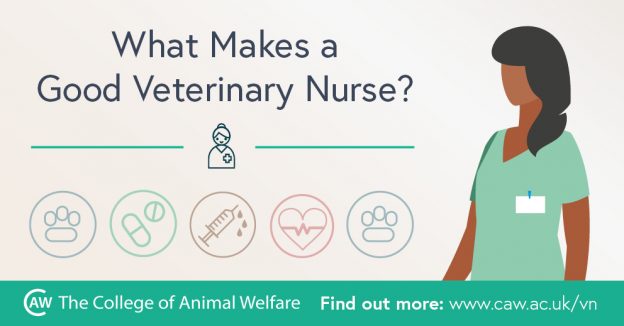
What Makes a Good Veterinary Nurse?

Veterinary nurses use their technical knowledge and expertise to care for our pets with skill and empathy every single day. It goes without saying that working as a veterinary nurse is a great choice for those who are caring, giving and motivated to do the best for animals. There are also lots of other qualities that can help someone succeed in the role. 
 
If you’ve considered training as a veterinary nurse before, you may have wondered whether the role is right for you and asked yourself: what makes a good veterinary nurse? To answer that question, take a look at just some of the skills and traits we think make a great veterinary nurse:

Passion and understanding of the role

Veterinary nursing is varied profession. In any given day you may find yourself: taking x-rays, medicating patients, doing consults, maintaining equipment, monitoring anaesthetics, dressing wounds, answering phones, cleaning and the list goes on! You need to make sure you have a realistic expectation of what the job will be like, so that you’re ready to get stuck in and make a real difference.

Good team working skills

Teamwork is essential among veterinary nurses, as often you will be required to work together to complete certain tasks. It’s critical to your practice’s success that everyone gets along and is willing to help each other.

Commitment to professional development

As a veterinary nurse you should be passionate about learning new skills and undertaking regular continuing professional development (CPD). Not only is it a professional requirement, but being committed to lifelong learning will ensure veterinary practices continue to provide the best possible care to patients. What’s more – CPD allows you to pinpoint where you want your career to go in the future. For example, you may wish to pursue a specialist area of nursing, take on a clinical coaching role, or become a head nurse.

Willingness to work flexibly

Not all veterinary practices offer emergency or out-of-hour services, but many do, so you should consider whether you would be open to working out-of-hours and stepping in during emergencies. Veterinary Nurses also often work on weekends, bank holidays and evenings.

Good technical knowledge and communication skills

Veterinary nurses often provide information, advice and guidance to owners on the care of their pets. You could be asked about any form of nursing or procedure, from blood work and IV catheter placement to recovery from anaesthesia. To this end, it’s important to have a good technical knowledge base in order to deal with client questions that go beyond simply “yes” or no”. You should also be able to act confidently in high pressure or emergency situations.

Resilience

Veterinary nursing is a rewarding profession, but it’s not always sunshine and rainbows! Seeing animals suffer from an illness or accident can be difficult to experience, especially for passionate animal lovers. In these situations it’s important to be able to separate your own feelings in order to get on with the job. You need to get the right balance between being compassionate and doing your job without breaking down.

Career Development for Veterinary Nurses

10 Career Development Opportunities for Veterinary Nurses

So you’ve achieved your veterinary nursing qualification and joined the RCVS register of veterinary nurses…now what?

It’s well documented that career opportunities for qualified veterinary nurses are excellent. Here, we look at just a few opportunities for career development for veterinary nurses…

  1. Top up your veterinary nursing qualification to degree level

Our Veterinary Nursing BSc (Top Up) programme, offers diploma and foundation degree level registered veterinary nurses the opportunity to top up their qualification to degree level. Studying at degree level offers a range of benefits, including exploring professional interests, developing skills in research and academic writing, and paving the way to further postgraduate training at masters or even PhD level. Discover more benefits of topping up your veterinary nursing qualification

  1. Land a great role in veterinary practice

Many veterinary nurses choose to remain in first opinion veterinary practice, however there are also options for RVNs with a particular interest to work in specialist practices (e.g. feline, equine, reptile or large animal practices), emergency vet practices, referral practices (e.g. orthopaedic, cardiology, oncology, ophthalmology) or veterinary/university hospitals. You could also become a locum veterinary nurse and gain experience in a range of different veterinary environments. If you’re looking for a place to start, check out the CAW Jobs Board.

  1. Undertake further veterinary nurse training in a specialist area

Nurses must continue to study and log professional development hours to maintain their registration throughout their careers. This means there is plenty of opportunity to pursue professional interests and undertake specialist training in a range of topics, particularly the care of exotic pets, feline medicine, anaesthesia and dentistry.

  1. Join the education industry

Many RVNs use their qualifications to pass on skills and expertise to the next generation of veterinary nurses in education roles such as lecturing. Teaching positions can vary widely, but veterinary nurses who choose to take up a role in education might be writing and developing course content, presenting lectures, workshops and practical teaching sessions, providing student support and guidance, assessing and moderating students, or undertaking research and representing educational institutions at conferences and exhibitions.

  1. Work towards a leadership or management role

If you’re looking for leadership and management opportunities within veterinary practice, you could become a head nurse or even work towards becoming a veterinary practice manager over time. The Veterinary Management Group (VMG) can provide more information about management opportunities and training.

  1. Become a Clinical Coach

Beside every great veterinary nurse is a great clinical coach, who supported them through their formal training and helped them develop their practical skills in practice. If you’re passionate about veterinary nursing and keen to help others flourish in the industry, you could consider training as a clinical coach and help to train student nurses in practice. Find out more about Clinical Coach training

  1. Pursue a sales role

Another career route you may take once you have qualified as a veterinary nurse is working for one of the many companies and service providers that supply the veterinary industry as a sales representative. Becoming a veterinary sales representative is one of the less-recognised career paths open to veterinary nurses. It offers a fantastic opportunity to travel, meet new people and help veterinary surgeons, veterinary nurses and other professionals to deliver better care to their patients.

  1. Spend time working abroad

Do you want to the opportunity to travel the world whilst gaining valuable skills as a veterinary nurse? Whether you’re a newly qualified veterinary nurse looking to gain more experience, have been working in industry for years and fancy taking on a new challenge, or just want to do something good with your time off – taking on a voluntary placement abroad could be for you! Volunteering worldwide is a great way to use your veterinary nursing skills to help animals in need.

The Worldwide Veterinary Service is an animal welfare charity that provides opportunities for vets and veterinary nurses to volunteer their skills and experience on placement in countries including India, Thailand, Peru, Malawi, South Africa, Costa Rica – and many more.

  1. Train in rehabilitation

As a qualified veterinary nurse, you could grow your career by training to become a veterinary physiotherapist or hydrotherapist. Rehabilitation following veterinary referral can help animals recover following surgery and from a variety of conditions such as pack pain, sprains, strains, fractures and sporting injuries. It has become a growing service within specialist veterinary hospitals, referral centres and first opinion practices. You can visit our career profiles to find out more about how to pursue a career in veterinary rehabilitation.

  1. Undertake academic writing and research

If you have studied to become a veterinary nurse at degree level, you may wish to pursue a career in conducting and publishing research. This work is essential to developing veterinary nursing techniques and championing evidence-based practice. You could also take your academic development in a new direction by speaking at industry congresses and events. If you have a creative flair, you could also aim to become a freelance writer. You could even start your own blog!
New Top Up Degree Launched for Registered Veterinary Nurses

The College of Animal Welfare now offers the opportunity for Registered Veterinary Nurses to top up their veterinary nursing qualification to a BSc Honours Veterinary Nursing degree, in partnership with Middlesex University.

Delivered predominantly via distance learning, the new programme aims to give learners the skills, experience and knowledge needed to become a critically thinking individual who can enhance the standing of the veterinary nursing profession.

Throughout the programme, learners will develop skills in critical evaluation, academic writing and complex decision-making. Veterinary Nurses will be able to tailor the degree to their professional interests by choosing from a range of elective modules including Nursing Exotics and Wildlife, Equine Nursing and Emergency and Critical Care. In addition, completion of the pharmacology module culminates in eligibility for Companion Animal Suitably Qualified Person status (C-SQP).

Dr Catherine Hemingway MRCVS, BSc VN Top Up Programme Leader at The College of Animal Welfare, said: “We’re delighted to be working in partnership with Middlesex University to deliver this programme, which is designed to provide learners with a variety of transferable skills which will enhance their veterinary career and continue their professional development.”

Applications to study the BSc Honours Veterinary Nursing Top Up Degree are open to start in September 2020 or January 2021. For more information about the programme visit www.caw.ac.uk/vn or contact the college on 01480 422060.

– Ends –

For more information please contact:
Tel: 01480 422060
Email: marketing@caw.ac.uk

Notes to editors:
The College of Animal Welfare is one of the UK’s leading providers of veterinary nurse and animal care training and education; operating from five training centres around the UK.

The College has a well-earned reputation for excellence and has created a number of unique achievements that have created new opportunities for learning.

For more information about The College of Animal Welfare please visit www.caw.ac.uk


BSc Hons Top Up Degree Veterinary Nursing Middlesex University Featured Image

New Top Up Degree Launched for Registered Veterinary Nurses

We’re delighted to announce we now offer the opportunity for Registered Veterinary Nurses to top-up their qualification to a BSc Honours Veterinary Nursing degree, in partnership with Middlesex University. 

Delivered predominantly by distance learning, the course aims to give you the skills, experience and knowledge needed to enhance your veterinary career and continue your personal and professional development.

Key Facts

  • Attendance: This programme is delivered predominately by distance learning with minimal classroom attendance required for one module.
  • Duration: Full time study – 2 years; Part time study – 3-4 years
  • Start Date: September 2020, January 2021
  • Location: Hendon, Huntingdon or Leeds

Throughout the programme you’ll develop skills in critical evaluation, academic writing and complex decision making. What’s more, you can tailor your degree to your professional interests with elective modules including:

  • Management and Business
  • Nursing Exotics and Wildlife
  • Companion Animal Behaviour and Training
  • Equine Nursing
  • Veterinary Education and Professional Development
  • Applied Emergency and Critical Care
  • International Veterinary Nursing

In addition, completion of the pharmacology module culminates in eligibility for Companion Animal Suitable Qualified Person status (C-SQP).

Applications are open to start the programme in September 2020 or January 2021. 

Find out more about the BSc Honours Veterinary Nursing Top Up Degree (Middlesex University)

Why Become a Veterinary Nurse Featured Image

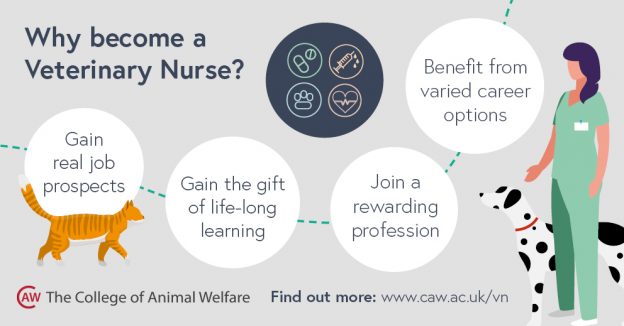
Why Become a Veterinary Nurse?

Veterinary nursing is a natural choice for those with their minds set on working with animals. If you have a passion for animal welfare, then you are likely already familiar with the profession and the important role that veterinary nurses play in raising animal welfare standards.

Read more about why veterinary nursing could be the career for you:

Gain real job prospects

Job prospects for registered veterinary nurses continue to remain high in veterinary practice and in related industries. What’s more – salary expectations have increased significantly in recent years, the median salary package for qualified veterinary nurses is now £30,500 (SPVS Salaries Survey 2022/3).

Join a rewarding profession

Veterinary nurses make a real difference to the lives of animals every single day. The sense of purpose that comes from nursing an ill, abandoned or stray animal back to health, and the long-lasting friendships fostered whilst working as part of a close-knit team in practice, makes veterinary nursing a rewarding and worthwhile career.

Benefit from varied career options

Upon completion of formal studies, veterinary nurses have numerous professional opportunities. You could remain in first opinion practice; move into referral practice and specialise in a particular area, train as an equine veterinary nurse, or find work in related industries such as management, research, teaching, sales or rehabilitation with further training. Read more about what you can do with a veterinary nursing qualification

Gain the gift of life-long learning

Continuing Professional Development (CPD) is a mandatory requirement for Registered Veterinary Nurses (RVNs), with 45 hours being required by the RCVS over a three year period. This gives those working in the profession the gift of life-long learning and education, and leaves plenty of opportunity to pursue professional interests and undertake specialist training in a range of topics, particularly the care of exotic pets, feline medicine, anaesthesia and dentistry.

Equine Apprenticeships for Employers

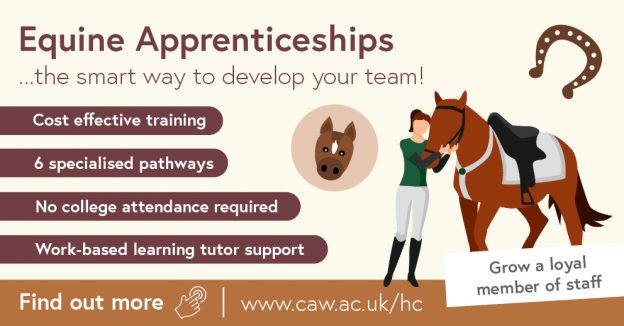
Equine Apprenticeships – the smart way to develop your team!

Apprenticeships have been around for some time and there are more benefits to employers than ever before. Not only do they provide an opportunity for someone to gain a qualification and valuable experience working with horses, they can help equine employers to expand and grow their team in a cost effective and practical way.

Quick facts about equine apprenticeships at The College of Animal Welfare:

  • The National Minimum Wage (NMW) for apprentices is currently just £3.90 per hour.*
  • Apprentices can now be part-time.
  • Existing staff can use apprenticeships to upskill or retrain – they are not just for new employees.
  • Apprentices can be any age (as long as they are over 16 years of age).
  • Apprentices do not attend college and they can start at any time! Our assessors visit at mutually convenient times and provide email and telephone support between visits.
  • We can help you recruit, screen candidates and even arrange interviews – for free!

£1,000 incentive to employers taking on a new apprentice

Take on a new apprentice aged 16-18 years of age and you will receive a £1,000 incentive towards their training fees (in two staged payments). What’s more, if your business has less than 50 contracted employees, the course fees for those aged 16-18 will be fully funded!

What will my apprentice learn?

Our Equine Apprenticeship programmes run within a 90 mile radius of our Huntingdon centre. They will equip apprentices with the practical skills and knowledge needed across key horse care skills. Examples of units include:

  • Safe Working Practices
  • Yard and Field Routines and Duties
  • Horse Anatomy, Physiology and Welfare
  • Horse Handling, Care and Appearance
  • Saddlery and Equipment
  • Travelling Horses
  • Non-Ridden Exercise

In addition to the core knowledge, skills and behaviours your apprentice will undertake further learning relevant to their job role and interests. There are five specialised routes you can choose, from each of which have specific knowledge and skills: Breeding, Riding, Driving, Non-Riding and Racing.

Not looking to recruit new staff? Train your current staff!

If you would like to train an existing member of staff, your employee will need to select the equine apprenticeship they are interested in and apply online.

If you would like to speak to a member of our team directly regarding our equine apprenticeship training, please contact us at admin@caw.ac.uk or on 01480 422060.