Author Archives: Amber Tennant

VCA Apprenticeship

Grow a loyal veterinary care support professional that meets the needs of your practice!

If you’re looking to recruit a veterinary care apprentice, or want to train up an existing member of your veterinary care team, then look no further than our Level 2 Apprenticeship in Veterinary Care Support!

This apprenticeship covers the key skillsknowledge and behaviours needed to ensure staff members maintain safe working practices and take responsibility for themselves, others and the animals in their care – coming out at the end of the programme fully equipped to thrive in their role!

Quick facts about the programme:

  • Distance learning: no college attendance required, start at any time
  • Typical duration: 12-18 months
  • 20% of time spent studying off the job
  • Cost effective apprenticeship training, fees as little as £250 for small businesses

Apprenticeships are an ideal way to increase productivity, improve performance and build a committed and skilled workforce in your practice. What’s more – apprenticeships are a cost effective way to train new or existing members of staff, as employers only pay 5% towards apprenticeship training fees!

Find out more about the Veterinary Care Support: Level 2 Apprenticeship 

If you would like to discuss apprenticeship training in further detail please do not hesitate to contact us at admin@caw.ac.uk or call us on 01480 422060.

CAW moves to new North London Centre

We are delighted to announce we are moving from our longstanding Boltons Park Farm home in Potters Bar, to North London Business Park in New Southgate.

The Potters Bar centre was originally opened over 20 years ago but with the increased demand for veterinary nursing training we have outgrown the centre and are moving to larger premises in North London. The new site is set within nearly 40 acres of beautifully landscaped grounds with an ornamental lake and offers on-site facilities including two cafes, a private gym and hairdressers.

The move will create further opportunities for expansion, with plans already underway to launch CAW Business School programmes in leadership and management and accounting at the centre. A new dog grooming school will be ready by the end of the year to add to the existing schools in Huntingdon and Leeds.

All CAW VN students and training practices have been notified and applications to start veterinary nursing training this September at the North London centre are now open.

Three drop in open days have been organised on 20th, 21st and 22nd August (2pm – 7pm) to provide the opportunity for those interested to come and view the new centre. All are welcome. To find out more about the new location on our website or call 01480 422060.

Masquerade Ball for Get Jo Walking Rehabilitation Fund Advertisement

Masquerade Ball – Friday 1st November

The College of Animal Welfare cordially invites you to attend a Masquerade Ball in Peterborough on Friday 1st November, in aid of the Get Jo Walking Rehabilitation Fund.

This black-tie ball promises to be a fabulous evening of sophistication, glamour and entertainment with a welcome drinks reception, delicious three-course dinner, live band and DJ, charity auction and raffle.

Key details:

  • Date: Friday 1st November 2019
  • Time: Doors open 6.30pm, dinner at 7.30pm, carriages at 1am
  • Location: The Cambridge Suite, East of England Arena and Events Centre, The East of England Showground, Peterborough
  • Dress code: Formal evening attire (masquerade theme)
  • Ticket price (individual): £65
  • Ticket price (group bookings of 10): £600

Local accommodation at the Marriott has been arranged at a special discounted rate. Click here for more info

Find out more about the Masquerade Ball and book your ticket

About the Get Jo Walking Rehabilitation Fund:

get jo walking rehabilitation fund fundraising page image

Jo is currently trying to rebuild her life after suffering a spinal infarction (more commonly known as a spinal stroke), which has left her paralysed from the waist down. Jo hopes to raise significant funds to continue and build upon her specialised neurological rehabilitation at Neurokinex in Gatwick, which is part of the Christopher and Dana Reeve Foundation. Here she has access to the latest global breakthroughs in neuroscience including the Xcite Wide Pulse Stimulation system which aims to reawaken pathways between muscle and brain, and a full bodyweight assisted gait Locomotor Training system, which essentially reminds the body how to walk. Read more and make a donation 

5 Ways to Pay for Your Veterinary Nurse Training

5 ways to fund your veterinary nurse training

If you’re interested in studying veterinary nursing with us, you may have asked yourself a very common question that many people ask when looking into further education: how am I going to finance my veterinary nurse training?

The good news is that there are lots of payment methods available to you! To help you decide what method is best for your circumstances, take a look at some of your payment options for our Level 3 Diploma in Veterinary Nursing…

  1. Payment in full or annually

Paying the veterinary nursing course fee in full before the start of the course, if you are able to do so, is the most simple and straightforward way to pay. Alternatively, you can pay for your course annually.

  1. Pay As You Learn Scheme

For those who are looking for a way of breaking down the cost of veterinary nurse training into more manageable payments, our Pay As You Learn (PAYL) scheme could be for you. On this scheme you can pay for your course fees by monthly direct debit or by monthly recurring payments via a credit or debit card. Your monthly payments will occur whist you are on programme until the date on your qualification certificate.

Please note that veterinary nursing fees, such as membership and exam fees are payable on top of course fees and are not included in the PAYL scheme.

Find out more about the Pay As You Learn scheme.

  1. Apprenticeships

If you are employed in a veterinary practice, you may be eligible to undertake the diploma course as part of an apprenticeship, in which case your employer would be required to pay your course fees. Many employers will support their staff with apprenticeship training if they believe the knowledge and skills you will gain will be of benefit to their organisation, so it is worth a chat to see if this possible.

  1. Advanced Learner Loan

If you are 19 years of age or over, living in England and planning to undertake the a level 3 veterinary nursing diploma course, you could qualify for an Advanced Learner Loan to help contribute to the cost of your studies.

With the Advanced Learner Loan, there’s no credit check, your household income isn’t taken into account and you won’t have to pay anything back until you earn over £25,000 a year. Once you start earning over £25,000 a year, you will pay back 9% of your income each month. So for example if you earned £27,000 a year you would pay back £15 a month.

Please be aware the maximum amount you can receive from the Advanced Learner Loan for the Level 3 Diploma in Veterinary Nursing is £7,172. This means there will be an outstanding balance of £4,184 left to pay. Therefore it is worth exploring other payment options to cover the outstanding balance. Visit our website for more information.

Find out more about the Advanced Learner Loan.

       5. CAW Loan Scheme

You can apply for a loan up to the cost of your course fees from The College of Animal Welfare and pay this back on completion of the course or if you decide to withdraw either in full, or through an agreed payment plan. If you’re interested in applying for the CAW Loan Scheme and would like further information, please contact the Funding Team on 01480 422060.

Please note awarding body fees are payable separately and are not included in the annual payment, PAYL or CAW Loan Scheme option.

Find out more about the CAW Loan Scheme.

If you’re interested in training as a veterinary nurse, but are still unsure about how you would fund your studies, please do not hesitate to contact us at admin@caw.ac.uk or call us on 01480 422060 to discuss your options in further detail, as there may be other options available or a method you may not have considered.

Veterinary Practice Work Experience

Tips and Advice for Gaining Work Experience in a Veterinary Practice

If you’re interested in studying veterinary nursing with us, you may have noticed that due to the work-based nature of the course, entry onto our Level 3 Diploma in Veterinary Nursing (Small Animal Pathway) programme requires you to either;

  • have completed a minimum of two weeks’ work experience in a veterinary environment within the last 12 months (non-employed students), or;
  • have secured employment within an RCVS approved TP or aTP that is willing to support you through the qualification (employed students)

Veterinary nursing is a popular profession and entry onto our training programmes is often very competitive, therefore work experience opportunities for aspiring student veterinary nurses can sometimes be hard to come by…

If you’re struggling to gain the experience needed to apply for the course, don’t give up! Take a look at our tips and advice about how to gain work experience in a veterinary practice:

Check local newspapers and online job boards

Job boards such as the CAW jobs board, Vet Times Jobs or Animal Jobs Direct list advertisements from veterinary practices for veterinary care assistants (undertaking the VCA course could be an alternative way for you to qualify for veterinary nurse training), animal nursing assistants or student veterinary nurses (SVNs)

Follow local veterinary colleges and veterinary practices on social media

Many training providers and veterinary practices will post their latest vacancies for student veterinary nurses on their social media pages, so it’s worth following those pages to ensure you are the first to see any new opportunities. You can follow us on social media here: [ss_social_follow networks=”facebook;twitter;instagram;pinterest”]

Check out your local veterinary practices’ websites

Many practices have their own vacancy page or further information about placement opportunities on their website, which can help you learn more about what they’re looking for. This way, you’ll also read more about who the practice is and what they do. Find a veterinary practice near you

Contact your local veterinary practices directly

By contacting practices to introduce yourself and enquire about work placements/employment directly, you are putting a face to your name and showing commitment and enthusiasm! You can drop them an email, give them a call or even stop by the practice to meet staff members in person. Even if they are unable to offer you a placement at that moment, they may be able to hold your details ready for future opportunities, or introduce you to other members of the profession who can help you gain a placement. Find a veterinary practice near you

Be aware that veterinary practices are often very busy, so don’t be disheartened if you aren’t able to speak to someone straight away. Practices are particularly busy at peak times such as Mondays and Fridays, so it’s worth trying to contact them mid-week.

Get more advice about gaining work experience in a veterinary practice…

L2 Certificate for Veterinary Receptionists promotional advertisement

Boost your receptionist skills in a veterinary practice setting…

If you’re working as a receptionist in a veterinary practice, our Level 2 Certificate for Veterinary Receptionists could be the perfect way for you to brush up on your professional knowledge and gain formal recognition of your expertise.

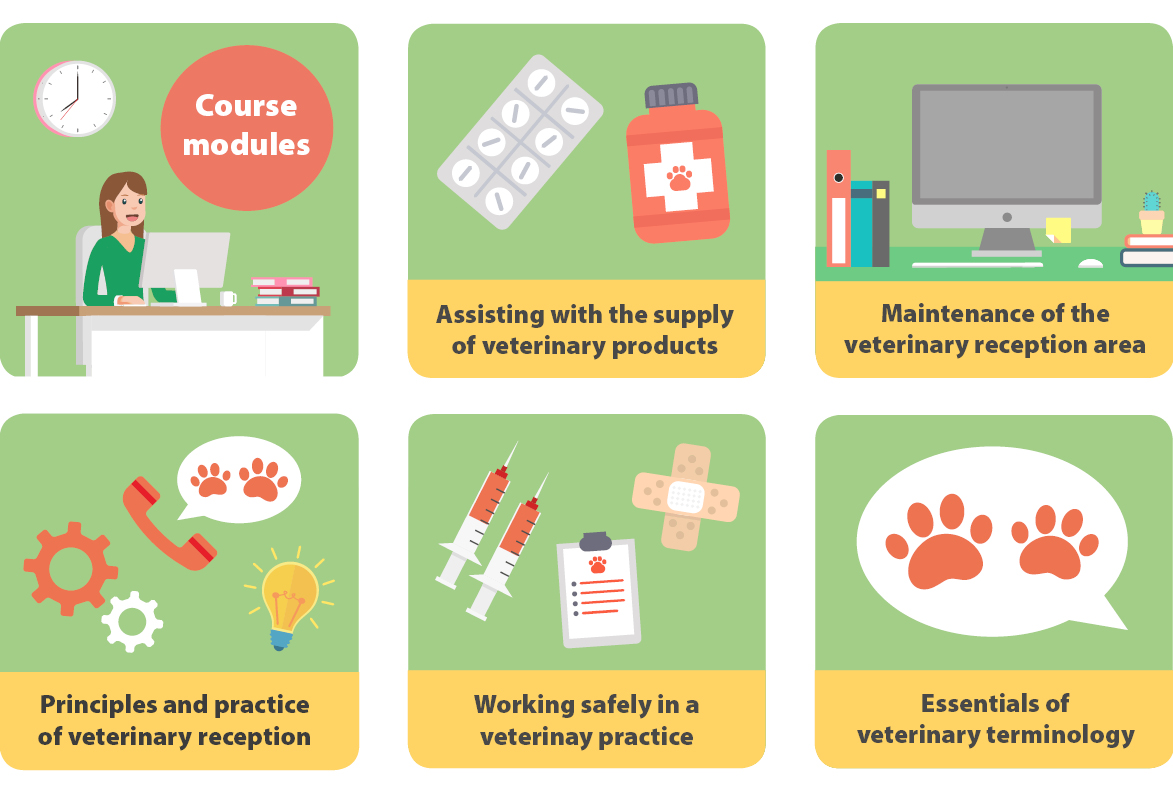
This online, distance learning course can be started at any time and is tailored to receptionists working in a veterinary environment. The course covers the key skills needed to provide an effective front-of-house service to veterinary clients, including: maintenance of the reception area, essentials of veterinary terminology, assisting with the supply of veterinary products – and much more!

L2 Certificate for Veterinary Receptionists course modules

Online learning…

Online learning means you can study this qualification from anywhere in the UK or overseas, at a time and pace that is convenient to you!
Flexible payment options…

We offer the opportunity for learners or employers to spread out the costs of learning into manageable monthly payments and, depending on your individual circumstances, advanced learner loans may also be available.

Find out more about the Level 2 Certificate for Veterinary Receptionists 

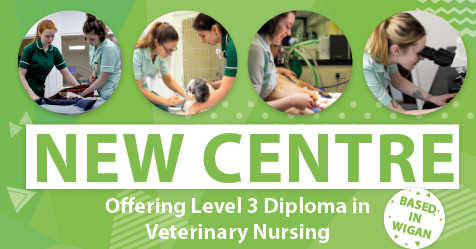
New veterinary nursing training centre in Wigan

Veterinary nurse training to continue in Wigan

ProCo NW, are no longer offering Veterinary Nursing training and therefore we have been able to add the Wigan centre to our current four centres in Edinburgh, Leeds, Huntingdon and Hertfordshire.

Here at The College of Animal Welfare we are really pleased to be able to support ProCo’s veterinary nursing students with continuing their training and we will now be responsible for all student veterinary nurses and training practices previously associated to ProCo. All affected students and training practices have been notified.

Looking to the future, we are pleased to announce that applications are now open for our Level 3 Diploma in Veterinary Nursing (Small Animal Pathway) programme starting from Wigan this September.   

As the largest provider of veterinary nurse training in the UK, studying with us offers the opportunity to train within a like-minded community who all share a common passion for animals and enthusiasm for an exciting and rewarding profession.

The course is open to those who wish to undertake the Diploma as a standalone qualification or to train as an apprentice using the new Apprenticeship Standard in Veterinary Nursing. The VN course will run on a day release basis, with attendance for those starting in September taking place on Wednesdays. Places are limited, therefore we would encourage prospective students or apprentices to apply as soon as possible.

For more information visit our website or call 01942 932585.


RCVS council agrees changes to CPD requirements for veterinary nurses

The Royal College of Veterinary Surgeon’s (RCVS) Council members have agreed changes to the College’s policies on Continuing Professional Development (CPD).

The changes, approved by both the RCVS Council and RCVS VN Council, are:

  • To change the CPD requirement – as stated in the Codes of Professional Conduct – to 35 hours per calendar year for veterinary surgeons and 15 hours in the same period for veterinary nurses, from the start of 2020. This replaces the previous requirement of 105 hours and 45 hours of CPD over a rolling three-year period for veterinary surgeons and veterinary nurses respectively.
  • Making the use of the new CPD platform (currently in development) for recording learning and development mandatory from 2022.
  • Giving veterinary surgeons and veterinary nurses who, upon renewing their registration, have confirmed their compliance with the requirement, the opportunity to download a certificate demonstrating this.
  • The introduction of an administration fee that will be charged to any veterinary surgeons or veterinary nurses who continually (defined as two or more years in a row) fail to confirm their compliance with the requirement and/or fail to respond to requests from the College for their CPD records.
  • Changing the words of the Codes of Professional Conduct to include the fact that CPD should be ‘regular’ and ‘relevant’.
  • The continuation of the CPD Referral Group, which meets to consider what further steps should be taken in cases of veterinary surgeons and veterinary nurses who continually fail to comply with CPD requirements and/or respond to requests.

Read more on the RCVS website

Level 2 Diploma in Animal Care Online Learning Advertisement

Start your journey towards a new career in animal care this Adult Learners Week!

If you’re longing for a job you love and have always wanted to work with animals, it’s never too late to learn the skills you need for a career change…and what better time to start than Adult Learners Week?!

Awarded by City & Guilds, our online learning Level 2 Diploma in Animal Care is the perfect way to gain an internationally recognised qualification from without attending college. All course materials are supplied via our Virtual Learning Environment (VLE), meaning you can study animal care from anywhere and alongside existing commitments. What’s more – we also offer a pay monthly option, making learning more accessible than ever!

The one year programme consists of online tuition and practical work experience, covering the health, welfare and care of a variety of small animal species. Completion of the qualification should give you the confidence to pursue a career in the animal care industry…

Start your journey towards a new career today!

Loneliness Awareness Week: 5 ways to feel more connected to others

It’s Loneliness Awareness Week!

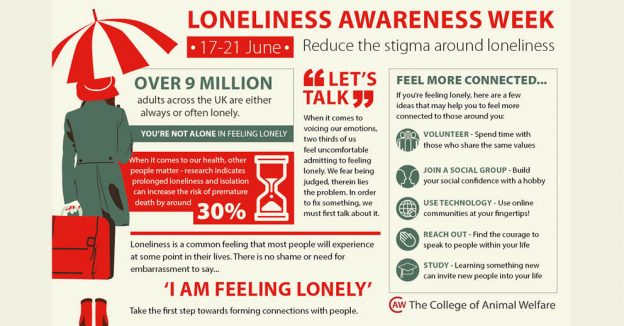
When it comes to our health, other people matter. Research indicates prolonged loneliness and isolation can increase the risk of premature death by around 30%.*

Contrary to popular belief, it is not just older people who struggle with loneliness.* Loneliness has many faces and most of us will experience it at some point in our life. If you’re feeling lonely, read on to find out how you can help yourself feel more connected to those around you:

Volunteer

Volunteering is a great way to make a difference in your local community. Not only this, but it can help create a bigger sense of purpose and can put you in touch with other volunteers who share the same mission and values. For example, you could consider becoming a befriender. Many people who struggle with loneliness or isolation may find it difficult to change their situation on their own due to mobility, illness or transport issues – so offering up your time to get to know someone on a long term basis can help you both feel less lonely. Visit the “Do-It” website to look for volunteering opportunities near you

Join a social group

Whatever your hobby or interest may be, have a look on the MeetUp website to see if there is a local group you can join. If there isn’t, why not try something new? Joining a group can help you build social confidence and meet others with similar interests.

Use technology to connect with others

We often hear that it’s harder to connect with people face-to-face in an age of social media, and it’s true that it’s easy to get into a habit of only ever texting, messaging or emailing people – but technology has also provided new ways to stay in touch with others and make new friends too. Making the effort to call or use video chat apps such as Skype and FaceTime is a great way of staying in touch with friends and family, particularly if you live far apart. What’s more – there are lots of online communities for all types of hobbies and interests that you can use to interact with like-minded people from all over the world.

Reach out to people you already know

We don’t all have close family members and friends to fall back on when we’re feeling lonely – but most of us know someone. Whether that be an old friend you’ve lost touch with, a colleague or even an acquaintance you may want to get to know better – it only takes a bit of courage to reach out to them with a short text or email to see how they are.

Go back to school

Taking a night, weekend or even online class can put you in touch with a new group of people who are interested in learning the same skill.

Remember, be open to forming new connections with people from all walks of life. You never know who you might hit it off with if you have enough in common!