Author Archives: Amber Tennant

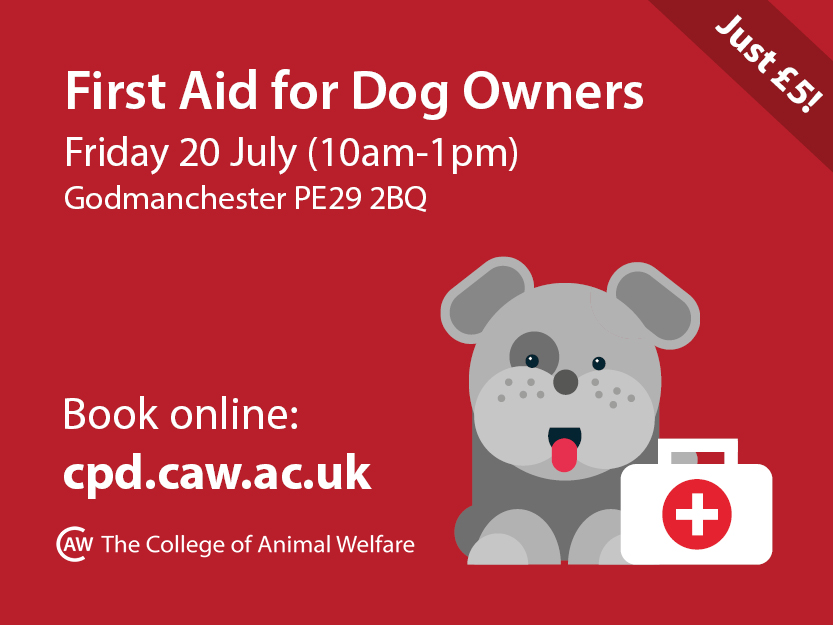
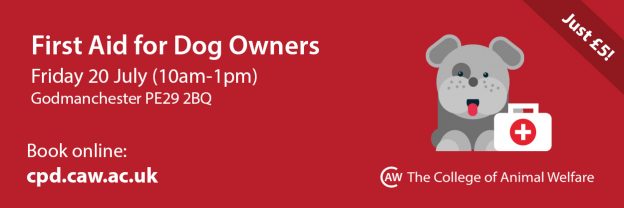
dog first aid course promotional poster

First Aid for Dog Owners half-day course: Friday 20 July (10am-1pm)

Would you know what to do if your dog was in trouble and needed urgent help?

Caring for dogs in an emergency takes many important skills. You need to be able to recognise what’s wrong; whether that be a dog suffering from heatstroke in the summer sunshine, or struggling to breathe after swallowing a strange object. You need to be able to remain calm, and respond confidently to ease your dog’s discomfort in the absence of immediate veterinary help. Not only this, but it is also important to know what you can do to prevent emergencies from occurring in the first place…

…that’s where Veterinary Nursing Lecturer and Veterinary Surgeon, Nina De Franco, comes in!

If you’re a dog owner keen to know more, why not join Nina on Friday 20 July for our First Aid for Dog Owners short course? From performing basic health checks, to knowing what to do when your dog has been poisoned; this half-day course will take a comprehensive look at how you can help your dog in moments of need!

You will walk away with all the information you need to, not only, prevent accidents (both at home and on the go) but also give you the confidence and skills to be able to competently handle any first aid emergency that may arise. You will cover basic CPR, as well as understand how to respond in the event of heatstroke, fits, unconsciousness – and much more!

The First Aid for Dog Owners short course takes place on Friday 20 July at our Huntingdon centre, from 10am-1pm. For further information and to book your place, visit https://goo.gl/q93fPq

dog first aid course promotional poster

RCVS to consult on new VN qualifications framework

The Royal College of Veterinary Surgeons (RCVS) is set to ask veterinary professionals for their views on a proposed new framework for veterinary nursing qualifications post-registration.

The proposals have been developed by the RCVS following the VN Futures research project, which found that many nurses wanted a more structured and rewarding career path.

The proposed framework aims to offer enhanced level veterinary nursing awards after registration, as well as specific modules for nurses at all career levels to study independently for Continuing Professional Development (CPD).

The two new qualifications included in the framework are a Graduate Certificate in Advanced Veterinary Nursing and a Postgraduate Certificate in Advanced Veterinary Nursing.

A consultation will be launched in early July. An email with a link to the consultation will be sent to all veterinary nurses and surgeons. Once launched, the survey will also be available at www.rcvs.org.uk/consultations

For further information please visit the RCVS website.

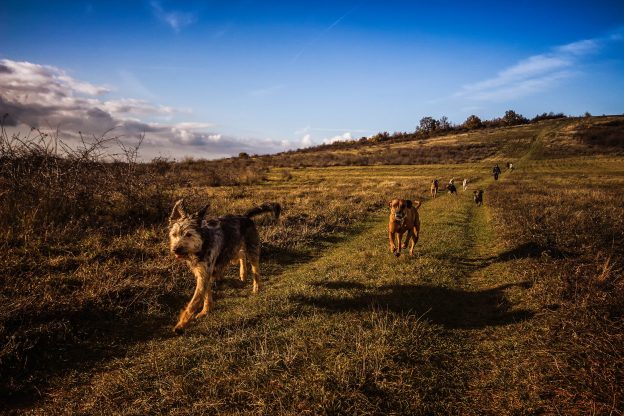
dog walking and pet sitting business short course

A Beginners Guide to Setting up a Dog Walking and Pet Sitting Business (2 day course: 4-5 August)

If you love animals, at some point you may have thought about becoming your own boss and starting up a dog walking and pet sitting business.

But starting your own business can be daunting, especially if you’ve never done it before! There are accounts to sort, paperwork to keep and legal obligations to follow – and then there’s running your business day-to-day and spreading the word about what you do.

If this is something you’re considering but aren’t sure how to get started, the Beginners Guide to setting up a Dog Walking and Pet Sitting Business, our 2 day CPD course taking place from 4-5 August at our Huntingdon centre, will help get you started on your new venture!

Our lecturer, Kate, runs her own successful dog walking and pet sitting business and will guide you through all the things you need to know to start up, and maintain, a fully-fledged business; sharing her experiences from along the way. You will learn about evaluating the market, identify training opportunities, defining your services, marketing your business, insurance and tax records – and much much more!

To find out more about the course, or to book a place, visit https://goo.gl/7wXnKV

dog walking and pet sitting business short course

dog in the snow - winter pet safety tips blog

Keep your pets safe this winter!

Brrrrr, its cold outside! As winter approaches and temperatures drop, it’s more important than ever that we’re looking out for our pets.

Wrap up warm!

Falling temperatures can be a serious hazard for pets – especially those who aren’t built to withstand the cold. Although frostbite and hypothermia is relatively uncommon, it can still happen!

Cats and thinly coated dogs, or those that are elderly or unwell, can be more risk from falling temperatures; make sure they’re safely inside when the weather gets cold and snowy. Investing in a dog or cat bed that is either raised or has sides with a warm blanket can help keep pets away from drafts. If your dog spends a lot of time outdoors, it might be worth purchasing a coat or fleece to keep them as insulated as possible when out and about.

Smaller pets such as guinea pigs and rabbits can be particularly vulnerable to colder temperatures. Make sure outdoor hutches are positioned so that rain and snow is unable to blow in. You could also partially cover hutches with a thick blanket, for extra warmth. If weather conditions are set to drop considerably, it would be worth bringing your pets’ hutch indoors or in a shed or garage for the duration of the bad weather.

Protect those paws!

Cold snow and ice can be uncomfortable to paws. Make sure to wash and completely dry your pet’s paws and underside after time outside, especially if they came into contact with any salt or chemical de-icer that could make your pet sick if they licked their paws.

Watch out for anti-freeze!

Anti-freeze is a huge hazard for pets in winter. It can often be found dripping from car radiators and even the smallest amount can be poisonous. Cats are particularly at risk due to its sweet taste and a cat’s freedom to roam the neighbourhood. Ensure you keep your dog on leads in areas where cars may have been to stop your pet from wandering and drinking from an anti-freeze laced puddle.

Symptoms of antifreeze poisoning in cats and dogs can include ‘drunken’ like behaviour, vomiting and seizures. If you suspect your pet is suffering from anti-freeze poisoning, seek help and advice from your local vets as soon as possible.

Check your cars!

Even the wariest of cats often seek warmth and shelter under vehicle hoods during the colder months, enticed by the heat from engines after cars have been parked. Needless to say, this could end very badly. Make sure you tap your car bonnet before starting the engine to encourage those hiding to move out of the way.

Visibility first!

As it becomes darker earlier during the winter; it may be worth investing in a reflective collar for your pet, so that they can be easily spotted by drivers when out and about. For dogs, you could also consider reflective leads and jackets, to ensure they’re easily visible on evening walks. Make sure you think about reflective clothing for yourself too!

Ponds and Lakes

Make sure you keep your dog away from lakes and rivers that are iced over as thin ice can break under the weight of a dog with disastrous consequences.

If you have a fish pond, ensure you check it every day for ice to prevent a build-up of toxic gases. If your pond does ice over, do not break the ice with force as it can harm fish. Instead you could hold a saucepan of hot water on the surface to melt a hole in the ice. Long term, why not invest in a floating pond de-icer to ensure there is always at least a small area free of ice.

world aids day 2017 red ribbon

World Aids Day 2017 (1 December) #EndIt

Today is World Aids Day!

World Aids Day is a national awareness day dedicated to highlighting the AIDS pandemic caused by the spread of HIV infection, and mourning those who have died of the disease.

This year has seen the first significant reduction in HIV diagnosis for gay men in London. This is due to frequent testing, rapid treatment and PrEP. The National Aids Trust (NAT) is looking for a new burst of energy in order to grow this success to include everybody at risk, wherever they may be in the UK.

But the fight doesn’t end with the virus itself. World Aids Day is also about pushing against the ignorance and discrimination that still limits the opportunities of over 100,000 people living with HIV in the UK. Those living with HIV are more likely to live in poverty, and more likely to have poor mental health.

What you can do

Campaign: Contact your local MP and ensure they are showing leadership on HIV. Make sure they understand the needs and priorities of their constituents who are living with or affected by HIV.

Educate: Download campaign resources from the World Aid’s Day website, and turn your school or workplace into an education hub. Encourage people to learn more about the history of HIV, what life with HIV is like, and how to protect themselves from being at risk of HIV. Fight stigma by breaking down the many myths surrounding HIV.

Fundraise: Get involved! There are many fundraising activities which can raise vital funds for the National Aids Trust (NAT). Doing so will ensure NAT continues to champion the rights of people with HIV and campaign for policy change. Download NATs fundraising pack

Volunteer: NAT offer volunteering opportunities with the following teams in its central London office: administration, communications, finance, fundraising and policy/campaigns. If you are interested in volunteering with NAT,  send them a message and they will try to match you with relevant upcoming opportunities.

For further information about World Aid’s Day visit www.worldaidsday.org

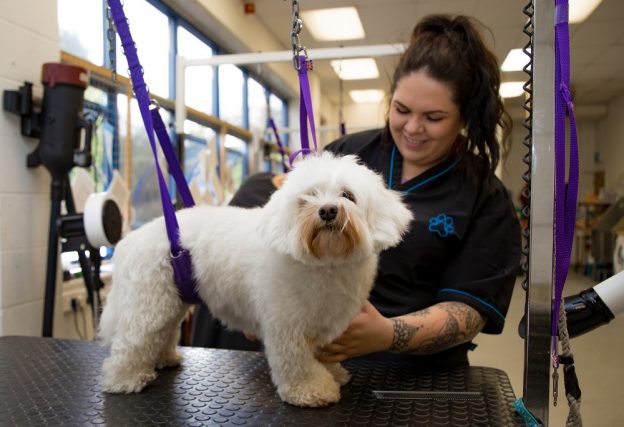
student dog groomer with dog - level 3 diploma dog grooming blog

In the spotlight: Level 3 Diploma in Dog Grooming

In August 2017, the City & Guilds Level 3 Certificate in Introductory Dog Grooming was discontinued for new registrations, being replaced by the Level 3 Diploma in Dog Grooming.  The new programme has become the only City & Guilds recognised dog grooming qualification available at this level. This naturally begs the question: what do we know about the new qualification?

What’s new:

  • Completion of the Level 2 Certificate for Dog Grooming Assistants is now a perquisite for studying the programme.
  • Since the change, there are far fewer training providers running level 3 programmes. This is because both new and existing centres who wish to offer the qualification must go through City & Guilds’ full Qualification Approval Process; there is no fast track approval for this qualification.
  • There are no optional units within this qualification; instead the programme is made up of four mandatory units: Health and safety, legislation and code of practice for the dog grooming industry; preparing, styling and finishing a dog; health checking and handling a dog in a dog grooming environment; customer service and recording keeping in a dog grooming environment.
  • In order to achieve the Level 3 Certificate in Introductory Dog Grooming, students were required to demonstrate achievement against units or subsets of the qualification content in order to gain enough credits to pass. By contrast, the Level 3 Diploma in Dog Grooming requires students to bring together and apply learning from across the qualification during one set of practical assessments. During the assessments, candidates will be given occupationally relevant problems to solve or outcomes to achieve; covering health checks, first aid and the grooming of dogs with different coat types and for different requirements.
  • Additionally, successful completion of the qualification will require learners to pass a written exam, which covers the theory within the mandatory units.

Dog Grooming training at The College of Animal Welfare

We run both the City & Guilds Level 2 Certificate for Dog Grooming Assistants, and the Level 3 Diploma in Dog Grooming from our centres in Huntingdon and Leeds.

Key Facts

Block or Day release study options
Our dog grooming qualifications can be undertaken on either a day release or block release basis, meaning you can choose a method of study which fits around existing commitments. As a day release student you would attend college part time, one day per week. Suitably qualified and experienced block release students would attend college full time, from Monday to Friday for a set number of weeks.

Pay as you learn
Unlike many other colleges, our Level 3 dog grooming course fees can be either paid in before the beginning of the course, or via our monthly payment scheme. What’s more – if you are over 19 years of age and undertake the Level 3 Diploma in Dog Grooming, you may be entitled to apply for an Advanced Learner Loan to help fund your studies! Find out more about fees and finance

Practical learning
Working with our qualified groomers in the College’s state-of-the-art dog grooming suites, there is a significant emphasis placed on developing practical skills throughout our programmes, giving you the skills and experience needed to stand out and progress within the industry.

For further information regarding our dog grooming training visit www.caw.ac.uk/dg Alternatively, contact us at admin@caw.ac.uk or on 01480 422060.

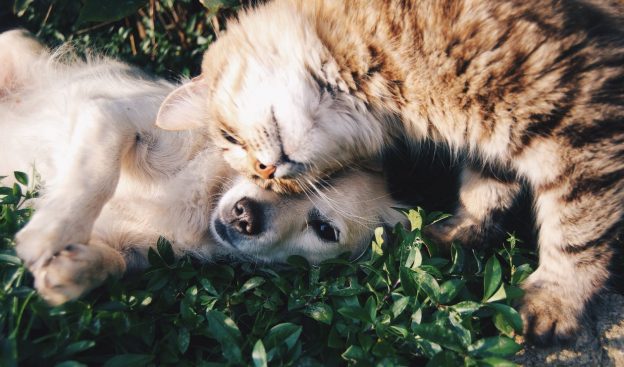
dog and cat - animal care apprentice training

Grow your team with an animal care apprentice!

If you’re looking to expand your team and take your business to the next level, there’s no better way to do so than investing in an Animal Care Apprentice! With the National Minimum Wage for Apprentices being just £3.50 per hour, it really is an affordable way to take on new staff whilst providing valuable experience and a training opportunity for someone keen to start working with animals.

What’s in it for me?

Cut your recruitment costs!
Boosting your team with an apprentice is a great way to bypass the added recruitment costs associated with outsourcing or recruiting skilled labour. You can fill your skills gaps by investing in the long term development of an apprentice, growing your own motivated, talented and loyal employee. What’s more – you can save even more on recruitment costs when you take on an apprentice with The College of Animal Welfare. As part of the recruitment process, we can advertise, filter applications for you and even arrange your interviews if you wish – all for FREE! Take a look at the recruitment process

No need to attend College!
As our apprenticeship programmes are work-based, you will not lose your apprentice to college time, all their learning will be done in the work place with support from a Work-based Learning Assessor who will visit your apprentice on a regular basis, and provide telephone and email support between visits. What’s more… Apprentices no longer have to be full-time employees and can undertake an apprenticeship part-time!

Gain an extra pair of hands for less!
Employers who take on an apprentice aged between 16-18 years of age will also receive a £1,000 incentive towards training fees; with further reductions available for organisations with less than 50 contracted employees. And, with the National Minimum Wage for Apprentices standing at £3.50 (November 2017), you can develop an apprentice for much less than it would cost to recruit for qualified labour.

Grow an employee who meets your business needs!
Whilst the majority of students undertake the Animal Care and Welfare pathway of our animal care qualifications, there are other pathways available such as Animal Training and Pet Care and Retail; allowing you to tailor your apprentice to specific business objectives and needs.

Benefit from specialist training with a reputable provider!
The College of Animal Welfare is one of the UKs leading providers of veterinary nurse and animal care training, running from four centres across the UK. We are very proud of the fact that all of our staff delivering our animal care courses have significant industry experience and knowledge under their belts; they all share a common passion for pushing the profession forward. Your apprentice will learn all the skills and knowledge needed to drive your business forward and become the best animal carers they can be.

Discover the benefits that apprenticeship training can bring to your business

Don’t just take it from us – hear what our employers have to say about the impact an animal care apprentice has had on their business…

Claire Brass joined the Darlington Retired Greyhound Trust (RGT) as a volunteer before becoming an apprentice, working her way up Head of Retired Section during her studies. Her line manager, Janet, said of Claire:

“Claire works to the best of her capabilities and is amazing within her role. Her strongest points are working with people…from the volunteers she supervises to the potential adopters who visit for information she makes everyone welcome and goes out of her way to help the adoption process. We have regular Duke of Edinburgh students and adults with special needs who Claire works closely with, very keen to spread the importance of animals as therapy.

“When not working at the kennels, Claire has driven hounds all over to their new homes, not put off by distance she has been as far as the Isle of Skye which required an overnight stay to ensure four hounds had the safety of a kennel. Claire has helped organise many fundraisers and embraced them all even though many include early mornings which are not her strong point! To begin with she had no knowledge of holding a fundraiser but can now confidently contact businesses as needed for preparation.”

What will my apprentice learn?

Our City & Guilds Animal Care Apprenticeship programmes run within a 90 mile radius of our Huntingdon, Leeds and Potters Bar centres. They will equip apprentices with the practical skills and knowledge needed across key animal care skills. Examples of units include:

  • Implement, monitor and evaluate plans for the health and welfare of animals
  • Promote, monitor and maintain health, safety and security of the workplace
  • Plan the handling and restraint of animals
  • Plan, supervise and control the movement of animals
  • Plan diets and feeding regimes for animals
  • Monitor and evaluate the feeding of animals
  • Plan the accommodation of animals
  • Monitor and evaluate the accommodation of animals
  • Load and unload animals for transportation
  • Establish animals in a new environment

Not looking to recruit new staff? Train your current staff!

If you would like to train an existing member of staff, your employee will need to select the programme they are interested in and apply online. If you would like to speak to a member of our team directly regarding our animal care apprenticeship training, please contact us at admin@caw.ac.uk or on 01480 422060.
head nurse congress 2018 - delegates and exhibitors

Back by popular demand – Head Nurse Congress 2018!

We are delighted to announce that Head Nurse Congress, sponsored by the Veterinary Practice Management Association (VPMA), is back from 19-20 May 2018!

Returning to the wonderful Whittlebury Hall Hotel and Spa in Northamptonshire, this year’s congress includes lectures on staff well-being, recruitment, managing difficult situations, leadership and coaching skills, Neuro-Linguistic Programming – and much more!

Not only will Head Nurse Congress increase your confidence in your everyday leadership and management skills, it will provide 12 hours of evidenced Continuing Professional Development (CPD).

Be an early bird and book before 31 March 2018!

Delegates who book before 31 March 2018 will be able to attend both days of Head Nurse Congress 2018 for the fantastic early bird price of just £249+VAT. For a full event agenda and booking details visit www.caw.ac.uk/hnc

Back by popular demand – Head Nurse Congress 2018!

The College of Animal Welfare is delighted to announce that Head Nurse Congress, sponsored by the Veterinary Practice Management Association (VPMA), is back from 19-20 May 2018!

Returning to the wonderful Whittlebury Hall Hotel and Spa in Northamptonshire, this year’s congress includes lectures on staff well-being, recruitment, managing difficult situations, leadership and coaching skills, Neuro-Linguistic Programming – and much more! Not only will Head Nurse Congress increase your confidence in your everyday leadership and management skills, it will provide 12 hours of evidenced Continuing Professional Development (CPD).

Tracey Croucher, Short Course and Events Manager at The College of Animal Welfare, said “We are delighted to have secured a variety of leading speakers from both inside and outside of the veterinary profession, to discuss topics which are truly relevant to the head nurse in today’s modern veterinary practice.” She added: “We are looking forward to, what is set to be, another excellent opportunity for those involved in veterinary practice management to come together to gain valuable CPD.”

Be an early bird and book before 31 March 2018!

Delegates who book before 31 March 2018 will be able to attend both days of congress for the fantastic early bird price of just £249+VAT. For a full event agenda and booking details visit www.caw.ac.uk/hnc or call the college on 01480 422060.

– Ends –

For more information please contact:
Alison German RVN
Senior Marketing and Communications Coordinator
The College of Animal Welfare
Tel: 01480 422060
Email: agerman@caw.ac.uk

Notes to editors:

About The College of Animal Welfare

The College is one of the UK’s leading providers of veterinary nurse and animal care training and education; operating from four training centres around the UK.

The College has a well-earned reputation for excellence and has created a number of unique achievements that have created new opportunities for learning, including the creation of the very first BSc Honours Veterinary Nursing degree programme jointly developed, delivered and assessed with Middlesex University in 1998.

For more information about The College of Animal Welfare please visit www.caw.ac.uk

christmas tree bauble close up

CAW Festive Employers Evening: Thursday 7 December, 6-9pm!

Calling all employers!

We are delighted to invite you to join us on Thursday 7 December at our Huntingdon centre (6-9pm), to make new connections, share some Christmas spirit and expand your network over cheese, wine and mince pies!

What’s more – the event will present the ideal opportunity to pick the brains of the CAW team, and learn more about how we can cater to your training needs. With further information on apprenticeships, distance learning and programmes in business, animal and veterinary studies available throughout the evening; for those looking to grow their business or upskill their staff, this is an event not to be missed!

Our festive evening will be held on Thursday 7 December, from 6-9pm at Headland House, Godmanchester PE29 2BQ.  

If you would like to attend the event, simply confirm your attendance with Tracey at tcroucher@caw.ac.uk or on 01480 422060 by Friday 24 November. ☃️?


More employer evenings to follow – save the dates!

» Leeds: Monday 29 January 2018, 6-9pm
» Potters Bar: Tuesday 27 March 2018, 6-9pm
» Edinburgh: Wednesday 18 April 2018, 6-9pm