Author Archives: Amber Tennant

world food day competition poster

E&D Competition of the Month: World Food Day (16 October)

This month’s prize competition topic is World Food Day – enter and be in with a chance to win a £20 amazon voucher!

World Food Day, celebrated on 16 October, is an annual worldwide day of action dedicated to tackling global hunger. The focus of the day is to promote food as a basic and fundamental human right, and to show commitment to providing food security and nutritious diets for all.

In order to be in with a chance of winning a £20 amazon voucher, you simply need to submit an effort you have made to engage with and/or raise awareness of the topic World Food Day to marketing@caw.ac.uk by Wednesday 25 October 2017.

What you choose to submit is open to your interpretation, meaning you can enter anything you feel is relevant. This could be anything from artwork and videos, to personal stories, blogs, fundraising efforts or poems. If you’re struggling to think of ideas, you could send us…

  • Artwork – Art has the power to create positive social change. Perhaps there is a particular societal problem involving food poverty or security that you care about. Why not create a poster or leaflet to highlight this?
  • Personal stories – What role does food play in your life? Do you have any family dinner traditions you can tell us about? How about a meal that is special to you? Telling a personal story is a great way to reach out to others and break down stigma.
  • Blogs – Blogging is one of the most accessible ways to share your ideas with others, and there are endless possibilities when it comes to what you can write about. You could write about cooking, baking, your favourite meals, food security and poverty, education… or cakes?!

These are just a few ideas. Remember – we will consider whatever you choose to submit, provided it fits the theme!

Good luck!

This competition is open to all students and staff at The College of Animal Welfare. Entries should be sent to marketing@caw.ac.uk, or handed in to College, by Wednesday 25 October 2017.

 

heart in the sand - world heart day

World Heart Day! (29 Sept)

World Heart Day is celebrated on the 29th September each year and is a campaign where people around the work participate in activities to take charge of their heart health and that of others!

Cardiovascular disease continues to be the leading cause of death and disability in the world today. You can find out more about how World Heart Day here, and how it came about https://www.worldheartday.org/

Here are some healthy heart tips to get you thinking:

Get Active: Getting – and staying – active can reduce your risk of developing heart disease. It can also be a great mood booster and stress buster.

Get your 5 a day: Eat at least five portions of a variety of fruit and vegetables a day. They’re a good source of fibre, vitamins and minerals.

Fish: Eat fish at least twice a week, including a portion of oily fish. Fish such as mackerel, sardines, fresh tuna and salmon are a source of omega-3 fats, which can help protect against heart disease.

Cut down on salt and saturated fat: Eating too many foods that are high in saturated fat can raise the level of cholesterol in your blood. This increases your risk of heart disease. To maintain healthy blood pressure, avoid using salt at the table and try adding less to your cooking.

dog peeking through a fence - keep microchipping information up-to-date

Dog’s Trust urge owners to update microchipping information

Dog’s Trust is urging all UK dog owners to ensure their dogs’ microchip information is up-to-date.

The message comes following the publication of the organisation’s Stray Dog Survey, which revealed that 181 dogs go missing every day.

The research found that 69% of the microchipped stray dogs taken in by Local Authorities were not able to be reunited with their owners, as their microchips contained out of date information. Because of this, many of these dogs risked the threat of being put to sleep by local authorities.

The charity suspects that these dogs may be much loved family pets which have sadly ended up permanently separated from their families because their owner’s had moved house or changed their phone number, and neglected to contact the microchip database to update their contact details on their dog’s microchip.

The research also revealed that only one in four people know to contact the local dog warden if they find a stray dog.

For further information visit the Dog’s Trust website.


dog peeking through a fence - keep microchipping information up-to-date

Dog’s Trust urge owners to update microchipping information

Dog’s Trust is urging all UK dog owners to ensure their dogs’ microchip information is up-to-date.

The message comes following the publication of the organisation’s Stray Dog Survey, which revealed that 181 dogs go missing every day.

The research found that 69% of the microchipped stray dogs taken in by Local Authorities were not able to be reunited with their owners, as their microchips contained out of date information. Because of this, many of these dogs risked the threat of being put to sleep by local authorities.

The charity suspects that these dogs may be much loved family pets which have sadly ended up permanently separated from their families because their owner’s had moved house or changed their phone number, and neglected to contact the microchip database to update their contact details on their dog’s microchip.

The research also revealed that only one in four people know to contact the local dog warden if they find a stray dog.

For further information visit the Dog’s Trust website.


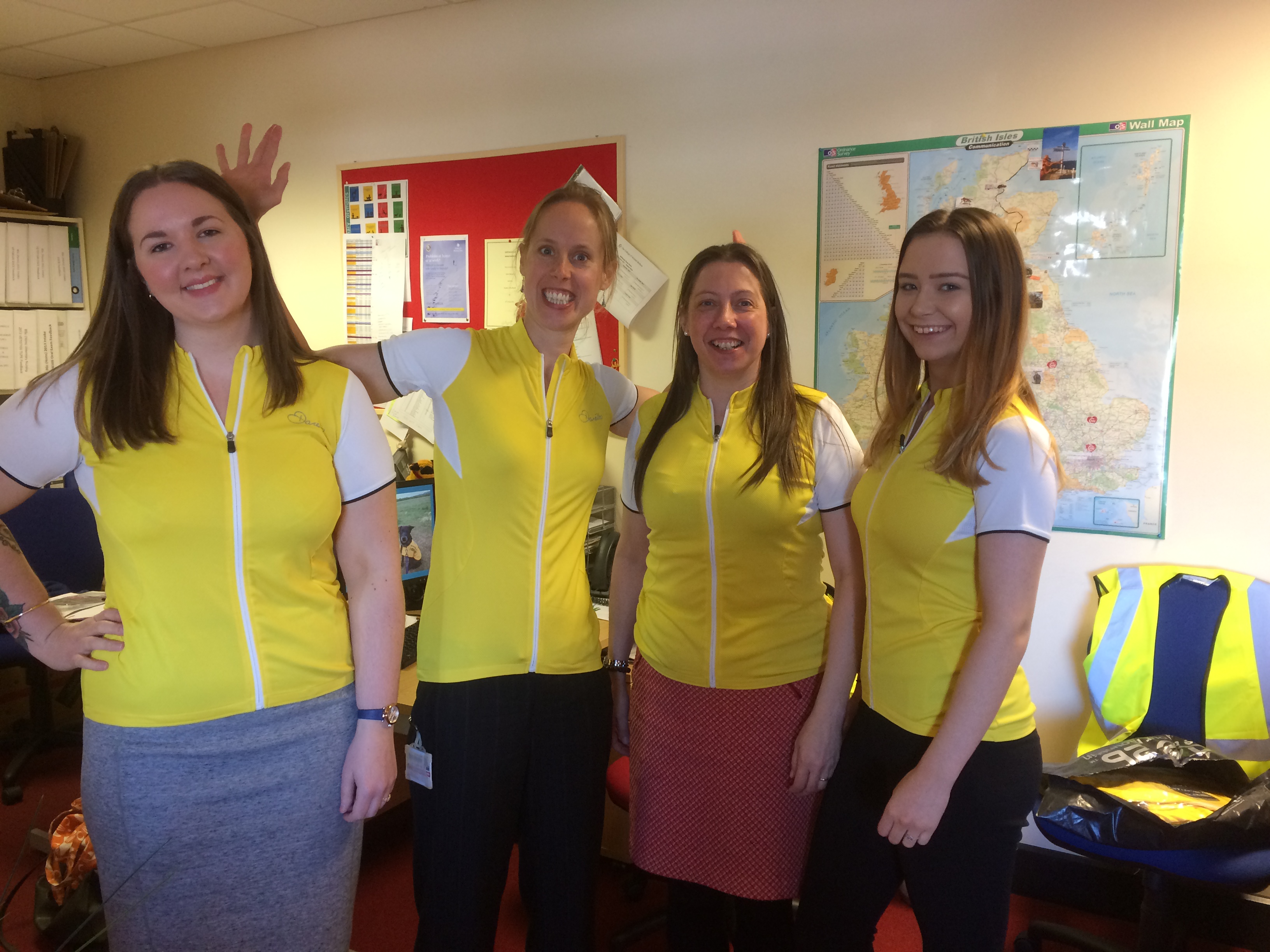
Help CAW Edinburgh raise money for the CCLG!

Our team in Edinburgh are “going gold” this September/October, in aid of the Children’s Cancer and Leukaemia Group (CCLG)!

The team will be kicking off their fundraising efforts with cake sales on the 4th and 18th October. If you are in college on those days, treat yourself to a yummy cake and help raise money for an excellent cause.

What’s more – the CAW Edinburgh team will be raising money for the charity by completing a 40 mile bike ride around Fife on the 21st October! 

To help the team raise money for this vital cause, you can donate directly to their fundraising page at https://www.justgiving.com/fundraising/team-caw

the caw edinburgh team - cclg fundraisingIMG_0495

European Day of Languages (26 September) – Broaden your horizons, learn a language!

Learning a new language takes time and commitment, but offers a rewarding set of advantages to your mental health. Studies show that bilingualism improves memory, organisational skills and performance in other academic areas. The process of learning a new language can also help you to understand your own native language in more depth. Why not take on the challenge? See our language learning tips below to get the best out of the experience of learning a language.

Make use of free language learning materials
You can find free resources on almost any subject you could ever want to learn about online. Prospective language learners should consider joining Duolingo – a gamified website that offers a variety of language courses free of charge. Open culture promotes free podcasts and videos, giving people the opportunity to choose from over 45 different languages.

Learn while you browse
Your browsing habits can be easily turned into a means to learn more vocabulary. Readlang is a free extension that translates words from your webpages, and then generates flashcards to help you remember them.

Learn through entertainment
Understanding language through popular culture can be a fun diversion from studying from a dictionary or book. You could watch a foreign movie or read a newspaper printed in your chosen language.

Connect with other people
Studying textbooks is a good way to build up a solid understanding of the structures behind different languages. However, if you’re unable to apply your newfound knowledge in real life, then your academic efforts have gone to waste. Broken conversations with native speakers might initially be tedious and awkward, but there’s only so far studying from a book can take you before it becomes crucial to learn by application.

To find out more about how you can promote language learning, you can visit the European Day of Languages website.

Being able to speak one language well can enhance your career prospects for life. If you’re looking to improve your understanding of English, our Functional Skills in English courses are open to anyone based in the UK. More information on how to apply can be found on our website.

red squirrel awareness week - red squirrel in a tree

Red Squirrel Awareness Week – Go Nuts for Squirrels!

This week is red squirrel awareness week!

This once common species has been on the decline, with numbers in the UK falling from approximately 3.5 million, to an estimated 120,000 (15,000 of which are thought to be in England).

Find out how you can help protect these wonderful redheads on the Wildlife Trust website.

Why not go on a Squirrel Safari and report your findings to The Wildlife Trust. Autumn is a great time to spot them as they forage for nuts to store for the winter!

Here are some facts about the nation’s favourite nutkin!

  • Like us, squirrels can either be left or right handed
  • They are strong swimmers
  • A red squirrels tails is used for balance, communication, to slow them when jumping…. And as a snuggly blanket!
  • Their ankles are double jointed to allow them to go down a tree headfirst.
dog looking at camera - puppy farm awareness blog

Puppy Farm Pups – What to look out for! (Puppy Farm Awareness Day – 19 Sept)

Today is Puppy Farm Awareness Day!

Puppy farming is the mass commercial production of puppies purely for profit. Dogs and pups in puppy farms are often kept in dark conditions, left completely unsocialised and prone to infectious diseases. The puppies bred are then sold en-masse by dealers, with many dying soon after reaching their new home.

If you’re looking to purchase a new puppy, read more about what to watch out for to make sure you’re not supporting this cruel practice!

You should be suspicious of puppy farming if the breeder refuses to allow you to see the mother, or if excuses are given for the mother’s absence; such as being at the vets, being sick or ‘belonging to a friend or relative’. A puppy needs to remain with its mother and litter mates until they are at least 8 weeks of age, therefore if there is no mother present this can be a major warning sign. Pups bred from a puppy farm will likely be taken away from the mother soon after birth in order to sell quickly and maximise profits. Never buy a puppy if you have not seen the puppy interacting with its mother unless you are really sure there is a genuine reason.

The main aim behind Puppy Farming is to produce as much profit as possible; therefore price can be a key indicator as to whether you’re purchasing a Puppy Farm Pup. Red flags include very cheap prices (£100-£350) or very expensive prices (£2000+).

Crucially, you should be allowed to visit the facilities where your puppy is being cared for. If the breeder is reluctant to arrange this, or refuses to allow you to see the rest of the litter, they may have something to hide. Dogs and pups bred in puppy farms are often subject to unhealthy and dangerous living conditions.

Make sure you pay attention to the condition of any facilities you visit, and apply common sense when assessing your surroundings: dogs should be visibly comfortable, and have access to clean water and food. Additionally there should be enough space for pups to exercise and move around – they should not be cooped up in cages – always trust your instincts!

If you are looking for a puppy, an ideal place to start is by looking for a Kennel Club Assured Breeder or from a rescue centre that’s a registered charity. Kennel Club Assured Breeders have to meet set breeding criteria and have their premises inspected. You can find out more about the Assured Breeder scheme on the Kennel Club website. Be extremely wary of purchasing puppies from online sellers, pet shops, garden centres or from free newspaper advertising. Many puppy farmers will transport their puppies to dealers who sell them via these means, as it makes it much more difficult to identify where the puppy came from.

And lastly – do not feel sorry for the puppy and buy it… This only adds fuel to the fire and allows puppy farmers to continue to breed and sell to people, like you! Instead please walk away and report your suspicions to the correct people (details below).

If you suspect you are dealing with a puppy farmer, you can report the incident to your local authority. Alternatively you can call Consumer Direct on 08454 040506.

Find out more:

https://www.thekennelclub.org.uk/our-resources/kennel-club-campaigns/puppy-farming/
http://www.pupaid.org/puppy-farming/how-do-we-stop-puppy-farms/

health and fitness tips blog - sunset on a beach

Health and Fitness Tips of the Month: September

Forgiveness

When somebody or something makes you unhappy, you have two choices. You can dwell on hurtful events and situations, or you can accept what has happened and focus on moving forward. It’s easy to hold onto resentment, but studies show that forgiveness can lead to a range of health benefits. These include healthier relationships, less anxiety and stress, greater psychological wellbeing, and higher self-esteem. By comparison, holding onto a grudge risks bringing anger and bitterness into your relationships with others. You risk becoming so wrapped up in negativity that you’re unable to see the bright side in anything.

Choosing to let go of resentment is not about forgetting that something painful has occurred, or about condoning bad behaviour. It is about taking responsibility over your feelings and putting yourself before those who have hurt you. Next time you’re feeling angry at someone or something, ask yourself whether it’s really worth sacrificing your health over. Instead: put it behind you and focus on your own happiness.

Eye health

Did you know the average blink lasts for about 1/10 of a second? Looking after our eyes is very important. One way to make sure your eyes are healthy is regular eye tests. The suggested time frame for our eyes to be tested is every two years; this can differ depending on age and eye conditions.

Some of the different health issues that can occur to the eye are eye disease, eye cancer, conjunctivitis and dry eye. If you think you have a health issue with your eyes seek information and help from your doctor.

If you think you may have a sight issue you can go to your local optician for an eye test which will determine what help you need e.g. Glasses.

For further information please visit the NHS website.

Reading

When was the last time you read a good book? If you’d rather be doing something else, you’re not alone. Many people struggle to find the time to read, or find more comfort in television and film; but if you’re part of the 36% of people in England that do not read for pleasure, you could be missing out on a wealth of mental health benefits.

According to a study from the University of Sussex, reading for just six minutes a day can be enough to reduce stress levels by up to 68%. Different from reading short news articles, or your social media messages – sitting down with a book involves long periods of focus and attention, keeping your mind stimulated and boosting concentration in everyday life.

Engaging with the experiences and feelings of others through reading is also associated with higher levels of empathy and improved relationships with others. If you’re looking to revitalise a love of reading, why not take a look at Amazon’s 100 Books to Read in a Lifetime?

International Literacy Day (8 September) – How an English Functional Skills qualification could transform your life!

Today is International Literacy Day! Roughly 12 percent of the world’s population is considered functionally illiterate, with only basic or below average literacy levels in their native languages. What’s more – 781 million people worldwide cannot read or write at all, including 126 million youth.*

Functional illiteracy is not just a problem limited to developing nations. In the UK, poor literacy skills are widespread. 16% of adults (around 5.8 million) people in England and Northern Ireland scoring at the lowest level of proficiency in literacy.*

This is where an English Functional Skills qualification comes in!

From better career prospects and increasing confidence, to further educational opportunities and greater independence; the power of literacy knows no bounds. Our English Functional Skills courses have no formal academic entry requirements, and are open to anyone based in the UK. Undertaking a formal qualification will help to you participate fully in society, transforming your life in more ways than one…

You will give yourself the freedom to live life in the way you choose!

Think about all the daily tasks which require basic literacy skills. Applying for jobs, doing the weekly shop, arranging appointments and travelling to name just a few. Improving your literacy will therefore help give you the freedom to take charge of tasks and situations you might have ordinarily relied upon others to handle. What’s more – with independence will come bucket loads of new found confidence and self-esteem that you can use to excel in your educational, work and personal life!

You will be well on the way to further learning!

Functional Skills form a vital part of all apprenticeship frameworks in England and can, in some cases, be used to progress onto higher level programmes of study.  See current apprenticeship vacancies at The College of Animal Welfare

You will increase your career prospects and pave the way to higher wages!

Learning to read, write and communicate effectively will be a solid asset in the jobs market, helping you stand out among stiff competition. This starts right from your CV. Something as small as a spelling or grammar mistake could be the difference between getting shortlisted and receiving a rejection email. Higher literacy will also allow you to expand your job role and take on more responsibility at work. This will pave the way to promotion and higher wages!

You will be able to pass on your skills to others!

Imagine how wonderful it would feel to be able to help others by passing on your literacy skills. If you have children, you will be able to support them with homework throughout their time at school.

Being able to read, write and communication effectively can enhance your career prospects for life. Our English Functional Skills courses have no formal academic entry requirements, and are open to anyone based in the UK. More information on how to apply can be found on our website.