Author Archives: Amber Tennant

Health and Fitness Tip of the Week: Bring on the sunshine!

Did You Know sunshine directly onto your skin helps you produce vitamin D, which fights depression, heart disease & osteoporosis? Sunlight has all sorts of health benefits such as; reducing the risk of type 2 diabetes, strengthening bones, lowering blood pressure and helping you sleep better.

Although sunshine is great for increasing our mood and has good benefits for our health, it can also be very bad for our skin. Every time you are burned by the sun protein and genetic tissues are damaged; increasing your chances of skin cancer. This is why it is important to cover your skin/put on sun cream.

“Sunshine is the best medicine”

Applications for Advanced Learner Loans now open!

Please note that the ‘Fees and Finance’ section of our website has been updated to reflect the changes from 24+ Learner Loans to Advanced Learner Loans.

If you are aged 19 or older and starting a Level 3 or above course on, or after, 1 August 2016, you may be eligible for one of the government’s new Advanced Learner Loans to help cover the cost of your studies.

It is easy to apply for a loan, as there is no credit check and your household income isn’t taken into account. You also won’t have to pay anything back until you earn over £21,000 a year.

For more information, and to find out if you are eligible, please visit our website.

Labrador puppy and tabby kittens

The College of Animal Welfare Launches New City & Guilds Level 2 Diploma in Animal Care Online Course

The College of Animal Welfare is delighted to announce the launch of its new City & Guilds Level 2 Diploma in Animal Care online learning course.

The availability of the level 2 diploma, accredited by City & Guilds, as an online distance learning course will now enable those looking to study animal care alongside any existing commitments the opportunity to do so.

All course materials are supplied via the College’s Virtual Learning Environment (VLE), meaning that learners can study from the comfort of their own home without needing to attend College. Consequently the course can be studied from anywhere in the UK and overseas; a development that the College believes will secure wider training opportunities for those with aspirations to work with animals.

Lisa Crowe, Head of Distance Learning at The College of Animal Welfare, said: “We recognise the crucial role that distance learning plays in helping those with busy home or work lives to pursue further training and expand their knowledge and skills” She continued: “We are therefore delighted to see the addition of this fully accredited course added to our portfolio of online learning qualifications”.

The one year programme consists of online tuition and practical work experience, covering the health, welfare and care of a variety of small animal species. Completion of the qualification should give learners the confidence to pursue a career in the animal care industry if they so wish.

For prospective learners looking for advice on help with course fees, the College runs a ‘Pay As You Learn’ scheme; allowing learners to pay monthly if needed.

What’s more, anyone enrolling before 1 September 2016 will be eligible for a £100 discount!

For further information please visit www.caw.ac.uk or call the College on 01480 422060.

Learning Disability Week (20-26 June 2016)

This month sees the return of Learning Disability Week, a welcome opportunity to come together to celebrate the achievements of people with learning disabilities. NHS figures estimate that around 1.5m people in the UK have a learning disability, but what does it mean? A lack of understanding of the range of conditions that exist means that many people face social prejudice every day. Mencap, the leading voice on learning disability, describes the term as “a reduced intellectual ability and difficulty with everyday activities – for example household tasks, socialising or managing money”. As a result many people with a learning disability are treated differently to others and often struggle to make friends. This year’s theme of ‘friendships and relationships’ aims to combat this problem by raising awareness of the crucial role that friendships play in helping people with a learning disability avoid social exclusion and feel valued within society.

Below are some more facts about the issues surrounding learning disability:

  • Children with a learning disability are often socially excluded and 8 out of 10 children with a learning disability are bullied.
  • Just 1 in 3 people with a learning disability take part in some form of education or training.
  • Less than a third of people with a learning disability have some choice of who they live with, and less than half have some choice over where they live.
  • People with a learning disability are 58 times more likely to die aged under 50 than other people. And four times as many people with a learning disability die of preventable causes as people in the general population.
  • 1 in 2 families with a disabled child live in poverty.
  • At least half of all adults with a learning disability live in the family home – meaning that many don’t get the same chances as other people to gain independence, learn key skills and make choices about their own lives.

To find out more about Mencap and what you can do to help, you can visit their website.

Health and Fitness Tip of the Week: Ready, Set, Breakfast!

Breakfast is the most important meal of the day. As well as supplying us with energy, breakfast is a good way to provide the body with important vitamins such as iron, calcium and vitamin B. Studies show that breakfast can be important in maintaining a healthy body weight, skipping breakfast can lead to you over eating during the day.

Eating breakfast can have long term health benefits such as reducing high blood pressure, heart disease and diabetes.

Students who eat breakfast have higher test scores than those who skip the morning meal. Having a well-balanced breakfast may provide better concentration levels when it comes to difficult tasks.

“There has never been a sadness that can’t be cured by breakfast food” – Ron Swanson

“All happiness depends on a leisurely breakfast” – John Gunther

Mountain Marathons for Beginners

Mountain marathons: what on earth? To the uninitiated, this might sound pretty daunting, and rather like the sort of event you never want to be involved in, but it is actually a very welcoming, fun sport with events suitable for a wide range of abilities.  Even if you have never heard of it and this doesn’t sound too appealing, read on to find out a bit more about it and how you can get involved.
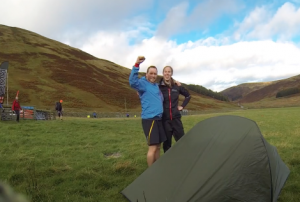
mountain marathonsWhat is a Mountain Marathon?

Essentially, this is a two-day running event with an overnight camp, but there are many different formats in existence, from 3 hour “mini” events to night-time only epics. Participants usually compete in teams of two, and must navigate their own way around an unmarked course in the hills or mountains of the UK within a set time limit, carrying everything they need for the two days, including all their camping gear. It is really important to pack carefully – a pack weighing more than 5kg quickly becomes a burden and will really slow you down. Elite competitors often carry less than 3kg apiece!
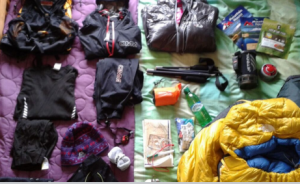
Packing becomes something of a logistical challenge!

Packing becomes something of a logistical challenge!

What Skills Do I Need?

You need to be able to read a map and use a compass: however fit you are, there are heavy time penalties for being late, so good navigation skills are a must. You need to be fit enough to cope with two days running and walking in the hills on rough ground – a lot of your time will be spent nowhere near a path! Having said that, unless you fancy entering the “Elite” class, you really don’t need to be as super-fit as you might think: good hill-walking fitness and the ability to run a half marathon will do to start with. A bombproof sense of humour, the ability to pitch a tent in under thirty seconds in a howling gale and some culinary wizardry to help you turn a packet of freeze dried noodles into haute cuisine are desirable, but not essential.
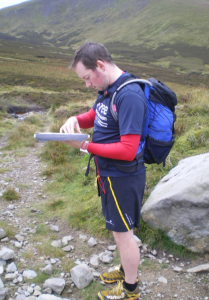
Decent shoes and rucksack will really improve your comfort and performance on the day.

Decent shoes and rucksack will really improve your comfort and performance on the day.

What Kit Do I Need?

This is a trade-off between comfort and performance: the heavier your pack, the harder your days will be, but you might be more comfortable at camp. Whilst it is possible to spend a fortune on top-end, lightweight gear, you can hire much of the more expensive pieces, such as tents and sleeping bags, and certainly for a first try I would recommend borrowing as much as possible until you know if you enjoy it. Essential items where it is worth spending some money include a lightweight rucksack which doesn’t bounce as you run, fell running shoes with excellent grip and a full set of lightweight, breathable waterproofs (it will always rain).
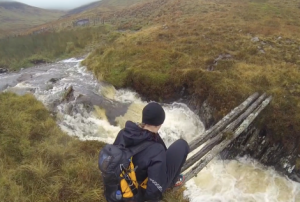


Courses have their own hazards and you decide what you can handle: we opted to find a safer crossing point!

Courses have their own hazards and you decide what you can handle: we opted to find a safer crossing point!

Is it dangerous?

I guess that depends on your definition! Certainly you shouldn’t expect to see marshals out on course keeping an eye on you, the route is up to you and don’t expect anyone to send out for Mountain Rescue until you’re at least a day late arriving at the finish. In addition to all the obvious hazards (cliffs, bogs, fast flowing streams), you also have to consider exhaustion, hypothermia and a variety of exciting diseases such as Lyme Disease, leptospirosis, giardia… Despite this, accidents are rare: you should take responsibility for your own decisions, know your capabilities and work closely with your partner. It is actually very liberating NOT being surrounded by Health & Safety paranoia for a change.

Navigation can be challenging...

Navigation can be challenging…

Can I Give It a Try?

If you are keen to give it a try (and you really should), the best place to start is probably with an organised “Mini” event, such as the Dark and White Mini Mountain Marathon or the Original Mountain Marathon (OMM) Lite. These give you a chance to see how you find the format, without the added pressure of a long day and overnight camp. These events are great fun, very supportive and a fantastic way to get out into the countryside. Once you’re hooked, try signing up for a short score course at one of the UK-wide events: the score format gives you the most flexibility to tailor the route to how you feel on the day.

Visit the Mini Mountain Marathon website or Original Mountain Marathon events page for more information on how to get started. Get out and give it a go!

Thank you to Glenn Tait for the featured images.

By Nina Tomlin

Find out what it is like to study at The College of Animal Welfare

Reminder for Clinical Coaches with Placement Students

If you are a Clinical Coach with a placement student then please ensure you review the behavioural tool every month and make a note of this on the tutorial record to highlight any areas for improvement. Please also ensure that the behavioural tool is submitted to the college on a monthly basis, along with the register of attendance.

Please contact your QAS if you have any queries.

30 Days Wild Challenge 2016: Join The Wildlife Trust in reconnecting with nature this June!

With over half of the world’s population now living in urban areas, it is sometimes difficult to escape the hustle and bustle of city living and find the time to retreat back to nature. The Wildlife Trust aims to make a change this June by encouraging people to do something wild every day for thirty days as part of their 30 Days Wild Challenge.

Efforts to reconnect with nature don’t need to be elaborate or expensive; simply taking time to notice the colours in the sky, a gentle breeze or the shapes of the clouds is a great way to learn to spend more time living in the moment, which has proven benefits to mental wellbeing. Below are some more suggestions about what you could do to better appreciate the natural environment this month:

Switch off all electronics for the day – Online communication and social media have become integral parts of modern living, but crafting the perfect online life sometimes means that we neglect our real one. Unplugging electronics can help us to escape the social media bubble by relieving the urge to document what we do. Instead we can concentrate on experiencing what nature has to offer us in person.

Go camping – From fishing and birdwatching, to biking and rock climbing; going camping is the perfect opportunity to try out new activities and have fun with friends or family. Camping also forces us to improvise new and creative ways to live without the luxuries offered by comfortable urban living.

Grow your own vegetables –Growing your own food might seem daunting, but there are simple guides available online to help you get started. Taking care over your own food will help you to keep active, reduce food waste and save money. Witnessing the process of growth first-hand also allows us to better appreciate how much we rely on natural resources to survive.

Make space for nature – Industrial progress has its benefits in creating new job opportunities and pushing forward the growth of industry, but conservation of the environment is often left behind in the process. Small efforts such as planting wildflowers or building a bird box in your garden can make a massive difference in encouraging wildlife to thrive in your area.

For more information about the 30 Days Wild Challenge you can visit The Wildlife Trust website.


The College of Animal Welfare Increase Day Release Veterinary Nursing Provision

Due to continuing high demand, in September 2016 The College of Animal Welfare will be running two, Level 3 Diploma in Veterinary Nursing, day release programmes from our centres in Huntingdon, Potters Bar and Leeds. This means that veterinary practices will, subject to availability, be able to choose which day their student attends college from the following days:

Huntingdon: Monday or Wednesday

Potters Bar: Monday or Tuesday

Leeds: Monday or Tuesday

As the largest provider of veterinary nurse training in the UK, the College is committed to providing learning opportunities for the promotion of animal welfare. As a result we welcome the increase in demand as an indication that more practices are seeing the benefit of training their own veterinary nurses. Karen Davidson, Vice Principal Academic at the College, said: “We are delighted to be seeing a continual increase in demand from veterinary practices for apprenticeship training. We hope that our decision to run two day release programmes will provide further flexibility for both our employers and students.”

For veterinary practices who are not currently involved in veterinary nurse training, but would like to find out more about how they can get involved; the College can help with either recruiting a new veterinary nursing apprentice or sourcing a unpaid placement student, all completely free of charge. We may even be able to offer free Training Practice approval to eligible practices! Furthermore, employers who take on a new apprentice veterinary nurse may be able to receive a £1,500 grant.

Applications for our September 2016 courses are now open and filling up fast. For more information on veterinary nurse training please visit www.caw.ac.uk or call the College on 01480 422060.

The College of Animal Welfare Increase Day Release Veterinary Nursing Provision

Due to continuing high demand, in September 2016 The College of Animal Welfare will be running two, Level 3 Diploma in Veterinary Nursing, day release programmes from its centres in Huntingdon, Potters Bar and Leeds. This means that veterinary practices will, subject to availability, be able to choose which day their student attends college from the following days:

Huntingdon: Monday or Wednesday

Potters Bar: Monday or Tuesday

Leeds: Monday or Tuesday

As the largest provider of veterinary nurse training in the UK, the College is committed to providing learning opportunities for the promotion of animal welfare. As a result it welcomes the increase in demand as an indication that more practices are seeing the benefit of training their own veterinary nurses. Karen Davidson, Vice Principal Academic at the College, said: “We are delighted to be seeing a continual increase in demand from veterinary practices for apprenticeship training. We hope that our decision to run two day release programmes will provide further flexibility for both our employers and students.”

For veterinary practices who are not currently involved in veterinary nurse training, but would like to find out more about how they can get involved; the College can help with either recruiting a new veterinary nursing apprentice or sourcing a unpaid placement student, all completely free of charge. They may even be able to offer free Training Practice approval to eligible practices! Furthermore, employers who take on a new apprentice veterinary nurse may be able to receive a £1,500 grant.

Applications for our September 2016 courses are now open and filling up fast. For more information on veterinary nurse training please visit www.caw.ac.uk or call the College on 01480 422060.

– Ends –

For more information please contact:

Alison German RVN
Marketing Executive
The College of Animal Welfare
Tel: 01480 422060
Email: agerman@caw.ac.uk

Notes to editors:
The College of Animal Welfare is one of the UK’s leading providers of veterinary nurse and animal care training and education; operating from four training centres around the UK.

The College has a well-earned reputation for excellence and has a number of unique achievements that have created new opportunities for learning.

For more information about The College of Animal Welfare please visit www.caw.ac.uk